Misinformation. Generated by ChatGPT
This campaign used a web of online networks, local actors groomed for influence, and Russian state media to launch a barrage of fake content before, during, and after the July 2023 coup in Niger.The digital age has democratised information like never before, but this abundance comes with the risk of disinformation and fake news. The World Economic Forum identifies this as the biggest risk to global stability in the next two years, even more dangerous than interstate armed conflict, extreme weather and inflation.
Disinformation is false information deliberately intended to deceive or manipulate. Since May 2023, the number of artificial intelligence-generated news outlets spreading disinformation rose from 49 to 802, according to NewsGuard, an American organisation tracking disinformation. These sites primarily publish seemingly harmless AI-generated articles infused with disinformation.
In Africa, disinformation is surging in information spaces at a time when funding and press freedom — a critical protective barrier against disinformation — are in decline. Sub-Saharan Africa has seen a decrease in press freedom since 2013, dropping from 65% to 57% by 2023. Dictators with access to resources often suppress media and other freedoms to maintain their elite bargain, which typically benefits from disinformation designed to make their regime look good.
Declining internal press freedom can also encourage disinformation from external actors. Russia, the primary purveyor of disinformation in Africa, has launched an annual Russia-Africa Media Forum and pursued content sharing and journalist training agreements with local media outlets across Africa. This includes agreements with Eritrean Eri-TV, the Democratic Republic of the Congo’s National Radio TV Corporation, the Maghreb Arab Press, Agency Ivoirians de Presse, Egyptian News Corporation Al-Ahram, and Algerie Press Service.
Russia has also expanded the availability of its state-run networks, such as TASS and Sputnik, on the continent and recently opened its first RT Africa bureau in Johannesburg, South Africa. Good Governance Africa’s head of peace and security, Stephen Buchanan-Clarke, notes that this increased media presence on the continent may further obscure Wagner Group/Africa Corps (the Kremlin’s primary vehicle for engineering disinformation in Africa) operations and shape the information landscape in its favour.
This “fake content industry” threatens the quality of journalism by manipulating information, blurring the lines between real and artificial, and jeopardising citizens’ rights to valid and reliable information.
Compounding this threat is the finding by researchers, as part of a BBC report on fake news in Africa, that most people do not consume their online news in-depth or critically. They instead share stories based on a headline or image without digesting it in detail themselves.
These headlines are often inflammatory, designed to evoke emotion and increase engagement, especially on social media, to attract targeted advertising. Consequently, ethics tend to fall by the wayside in the pursuit of revenue.
Disinformation can exacerbate social tensions, cause panic and threaten public safety. It can also sway public opinion and trust in institutions, destabilise democracies (as seen in the Niger case), and discourage electoral participation.
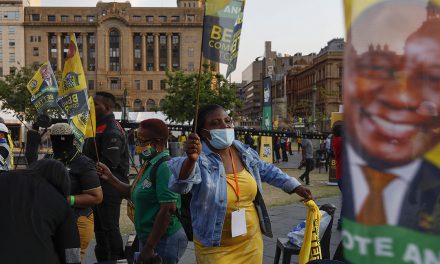
African elections present prime opportunities for spreading disinformation. One private Israeli group, “Team Jorge,” has reportedly implemented disinformation campaigns to disrupt more than 20 African elections since 2015. A weakened media landscape means electorates in those contexts become easy targets of disinformation campaigns — even more concerning as many African countries head to the polls this year.
Combating disinformation in Africa and beyond requires a holistic approach, and quantifying news credibility can make a difference.
Assigning a “credibility score” would not be the sole arbiter of truth but can allow people to make informed decisions about their online consumption while simultaneously encouraging publishers to prioritise quality journalism. But defining, operationalising, and measuring news media quality is difficult because evaluative criteria often depend upon beliefs about the ideal society, which are inherently contested.
Nevertheless, assigning “objective” scores based on factors such as fact-checking mechanisms and accuracy, transparency of ownership, and evidence-based journalism can be a good starting point.
Critics might argue that quantifying credibility is a simplistic solution to a complex problem. After all, journalistic credibility goes beyond the above indicators. Originality, depth of reporting and journalistic ethics are important, and a single score might not capture these nuances. Although this criticism is legitimate, a comprehensive system would use various relevant metrics, each weighted as a component of a composite credibility indicator.
Fact-checking mechanisms and accuracy, for instance, could be a central, most-weighted metric, with additional weights for indicators like attribution of sources and evidence-based journalism. In such a system, a news outlet without these mechanisms would see its score negatively affected.
Quantification has the potential to incentivise publishers to prioritise quality journalism. In a system where credibility scores are readily accessible to users, a race to the top could emerge. News outlets with higher credibility would attract a larger audience, leading to increased revenue and influence. This, in turn, would motivate publishers to prioritise or invest in fact-checking resources, evidence-based journalism and overall journalistic integrity. Lower-scoring platforms would be forced to re-evaluate their practices or risk irrelevance.
Challenges might exist in developing and implementing such a system. Who would be responsible for assigning the scores? Could the system be manipulated by biased actors? Ideally, an independent body of experts and organisations in the field would create and oversee the scoring system. Transparency in the methodology would be paramount and allow users to understand how scores are calculated. Furthermore, the system would need to constantly evolve, considering the fast-changing nature of dis/misinformation and fake news.
The potential benefits of this endeavour outweigh the risks. A robust credibility scoring system allows users to identify reliable news sources and can create a more responsible and informative online environment. It can also encourage publishers to prioritise quality journalism in the age of mis/disinformation. Although not a perfect solution, quantifying news credibility is a step towards a healthier and more credible news media in the digital age, including in Africa, where disinformation is rising and spreading fast.
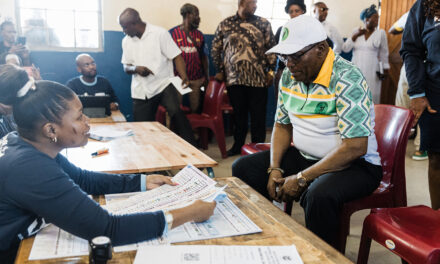
A better-informed populace makes better decisions at the ballot box and in various other aspects of their lives. It is a complex challenge, but the potential rewards — an African news media landscape less susceptible to disinformation — is worth pursuing.
This article first appeared in Mail & Guardian.