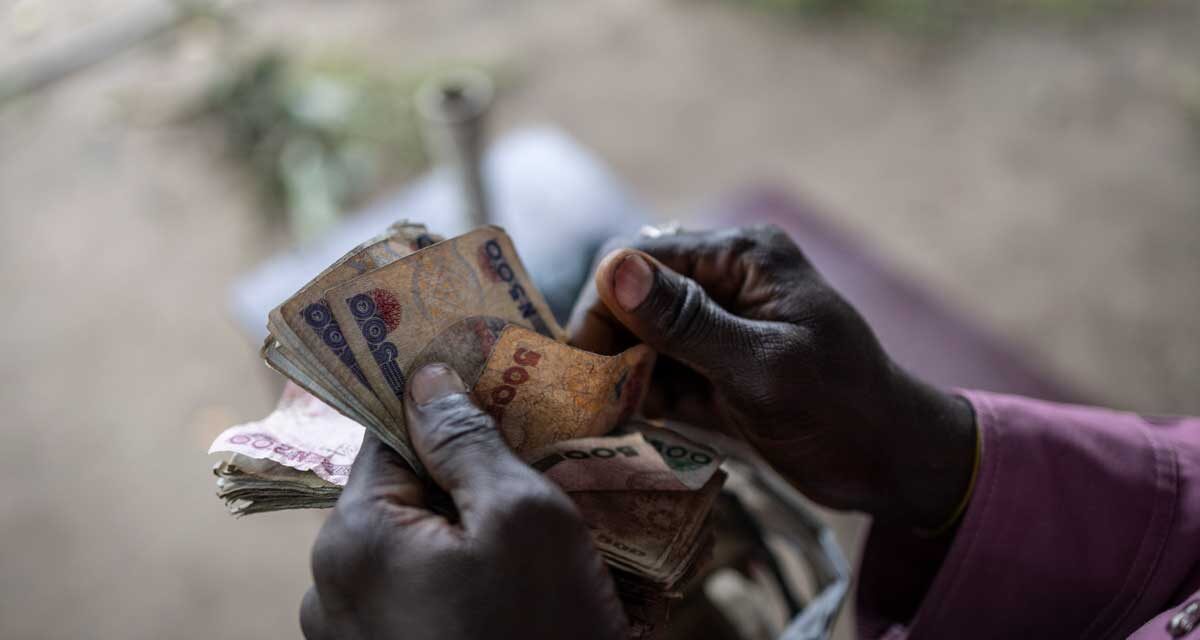
Counter-terrorism financing is often described as a contest between governments attempting to restrict financial flows and terrorist organisations seeking new ways to survive. A closer look at how the Islamic State West Africa Province (ISWAP) responded to a major currency shock suggests that this contest is not only about who has more resources — it is also about who can adapt faster.
Research conducted by Good Governance Africa reveals that the Central Bank of Nigeria’s 2022–2023 naira redesign – introduced to reduce excess cash circulation, address currency hoarding, and combat illicit financial flows—created significant panic inside territories controlled by ISWAP. The group appears to have avoided the kind of financial disruption the policy was designed to produce, at least in the areas and timeframe this research covers, and in some respects may have come out of the episode with a more diversified set of financial channels than it had before.
We do not know what ISWAP’s financial position would have looked like without the redesign, but what the evidence does support is that this one policy did not eliminate ISWAP’s access to usable value, and the group’s response illustrates one way an armed group can attempt to manage a currency shock, which can even create incentives for innovation.
A cash economy faces an unexpected shock
ISWAP-controlled communities across the Lake Chad Basin operate almost entirely on cash. Taxes on fishermen, traders, farmers, and herders are collected physically. Trade within island communities relies on cash transactions. Payments for logistics, food supplies, and many cross-border purchases are similarly cash-based.
When the Central Bank announced the redesign of the ₦200, ₦500 and ₦1,000 notes and imposed deadlines for exchanging old notes, accompanied by strict cash withdrawal limits, uncertainty quickly spread into these communities. People feared their cash would become worthless because they could not openly access Nigeria’s banking system.
According to multiple field sources, ISWAP’s leadership moved quickly to reassure communities. Rather than allowing panic, the group reportedly instructed civilians to continue using the old currency and directed its revenue workers to continue accepting the old notes, with leadership assuring people it would assume responsibility for resolving the problem—effectively transferring the financial risk from civilians to the organisation itself.
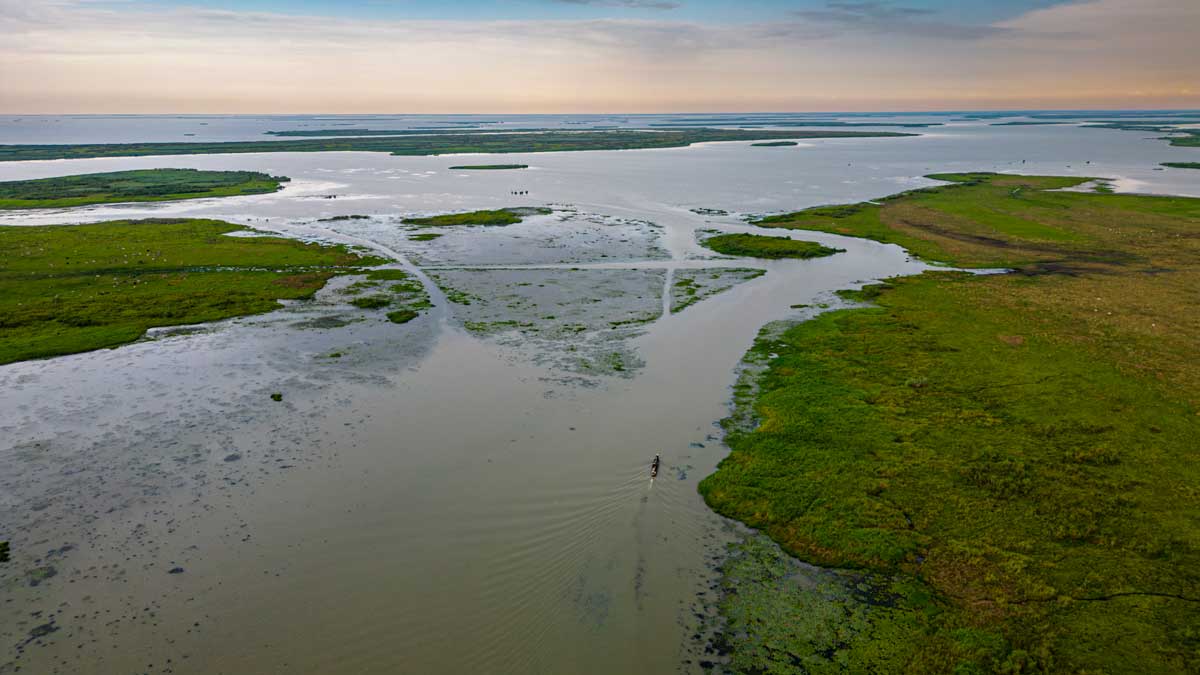
Lake Chad. Photo by Michael Runkel / Robert Harding via AFP
Converting cash into assets
Having accumulated enormous quantities of old naira notes through taxation and commercial activities, ISWAP is reported to have pursued three strategies implemented together to preserve value.
The first was liquidity distribution.
Big traders operating within the islands were reportedly given large quantities of cash with instructions that the money would later be recovered. They were not given specific instructions on how to use the cash. Rather, the expectation was that, as traders, they would naturally inject it into their business activities. Since ISWAP did not expect any profit or return on the funds, the arrangement effectively benefited the traders, who were free to use the money for commerce and retain any profits generated.
The second strategy involved converting cash into commodities. Cash was reportedly distributed to some ISWAP members to buy more food, especially grains, from farmers on the islands and from outside ISWAP-controlled territories.
One former senior ISWAP member described purchasing approximately 8,000 bags of maize during the redesign period at prices ranging between N7,000 and N9,000 per 50-kilogram bag. Another source described overseeing storage of approximately 100,000 litres of fuel—supplied in roughly 4,000 25-litre jerrycans—purchased from Cameroon by ISWAP’s Krenowa Wilaya. The fuel was said to have been stored in Kirta in Monguno local government area of Borno state. In addition, part of the available cash was redirected towards purchasing weapons through networks operating across Chad and Cameroon.
The third strategy focused on converting unspent cash into the new Nigerian bank notes and Central African CFA franc (XAF). Implementing this strategy relied on ISWAP’s network of licit businesses operated by trusted agents across major cities in Nigeria and neighbouring countries.
According to interviews with several former ISWAP members, the group deploys individuals to cities such as Maiduguri, Kano, Kaduna, Mubi, Abuja, Diffa, N’Djamena and Maroua, where they establish and run legitimate businesses, including supermarkets, textile shops, electronics stores and bureaux de change. These businesses reportedly operate within the formal economy, with their owners possessing the documentation required to open and operate bank accounts, including Bank Verification Numbers (BVNs), National Identification Numbers (NINs), driver’s licences, international passports, and physical addresses.
Former members also said that these agents are encouraged to own, rather than rent, the houses they live in, and that only married men are deployed, as families are considered less likely to attract suspicion than single individuals.
Before deployment from Lake Chad, the nominated individuals are reportedly required to pledge allegiance, after which an oath of secrecy is administered. The oath ensures that in the case of their arrest, they will not divulge any information that adversely affects the group.
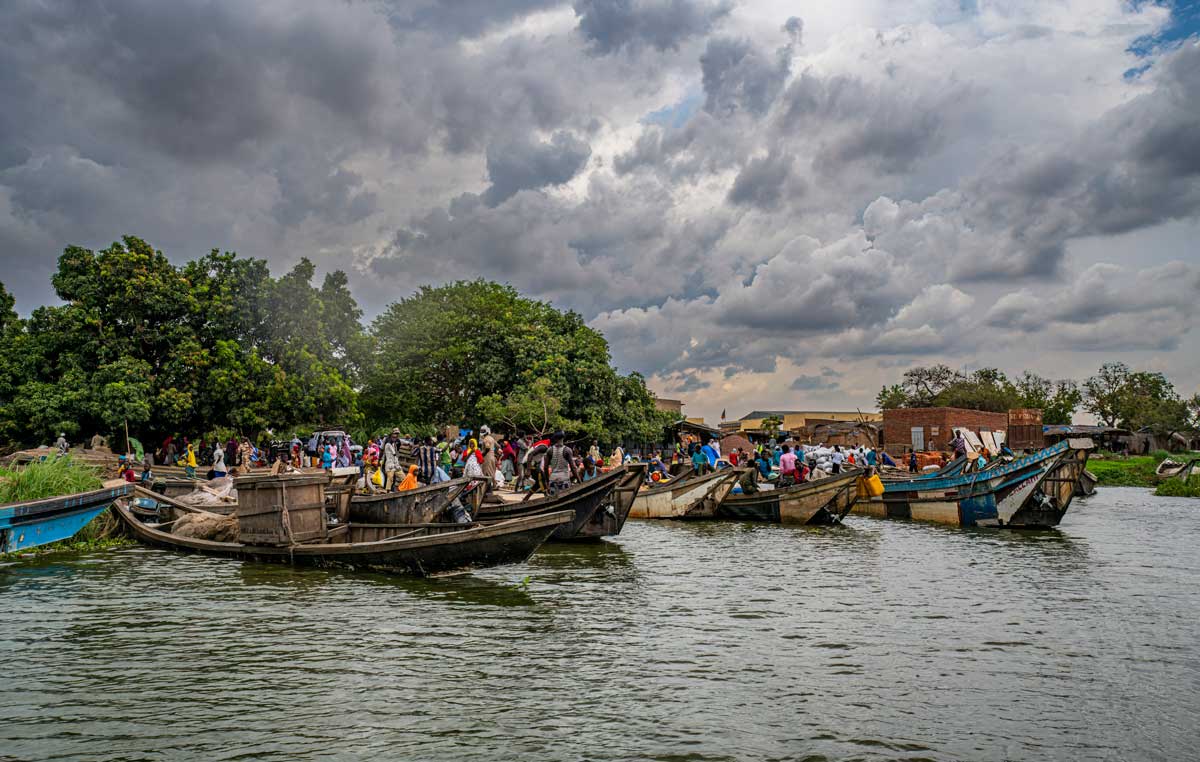
A harbour on the shores of Lake Chad. Photo by Michael Runkel / Robert Harding – AFP
Beyond running legitimate businesses, these agents reportedly serve as ISWAP’s logistical and procurement network – sourcing goods requested by the group, including items from outside the African continent, and arranging accommodation, transport, and other logistics whenever senior ISWAP leaders travel discreetly from the Lake Chad islands to urban centres. Former fighters, for example, said that ISWAP’s former Amir al-Jaish, Muhammad Yusuf, better known as Abu Abdullahi, was fitted with a prosthetic leg in Kano after losing a limb to injuries sustained during a military airstrike on the islands. They also reported that, before his death, Abu Bilal al-Minuki received treatment in Kano for kidney-related ailments.
When the naira redesign was announced, ISWAP turned to this network to help convert its stockpile of old banknotes into the newly introduced currency. The cash was smuggled out of the Lake Chad islands concealed in cartons disguised as fish consignments before being distributed to trusted agents for exchange. A mid-level commander involved in moving the money described how Krenowa Wilaya executed the operation.
“We moved more than 60 sacks labelled as 50 kg, all filled with ₦500 notes. We spent two days at the store in Jibrillaram, where the money was kept, sorting the banknotes and filling the sacks. The cash we later destroyed because it had become partly decomposed amounted to more than ₦600 million (approximately $1.34 million at the prevailing exchange rate). We focused only on the naira because of the urgency of the situation. There were also CFA francs, euros, and US dollars in the store, but we did not touch them,” the former fighter explained.
The filled sacks were then transported to another island, where the cash was repacked into cartons typically used to transport fish. Disguised as fish consignments, the cartons were subsequently shipped to Cameroon, said the former fighter.
He said that once in Cameroon, part of the money was exchanged for CFA francs, while the remainder was reportedly used to purchase goods. Cash was sent to various Nigerian cities and deposited into banks by ISWAP-linked agents. Because these agents were traders engaged in legitimate businesses, they were able to deposit the money into the banking system without attracting suspicion, he said.
Moving to a cashless system
One of the fallouts of the Naira redesign and the severe cash scarcity was that it accelerated Nigeria’s cashless policy, as people were forced to use their bank cards for transactions.
While the cash crunch had little impact on economic activities on the Lake Chad islands, ISWAP reportedly faced a different kind of cash challenge, particularly in Krenowa Wilaya. Separate from zakat collected in the form of small ruminants (goats and sheep), the group reportedly receives between 2,000 and 3,000 cattle annually from pastoralists as zakat in this wilaya alone. In the past, it was left with several hundred cattle from the previous year’s collection.
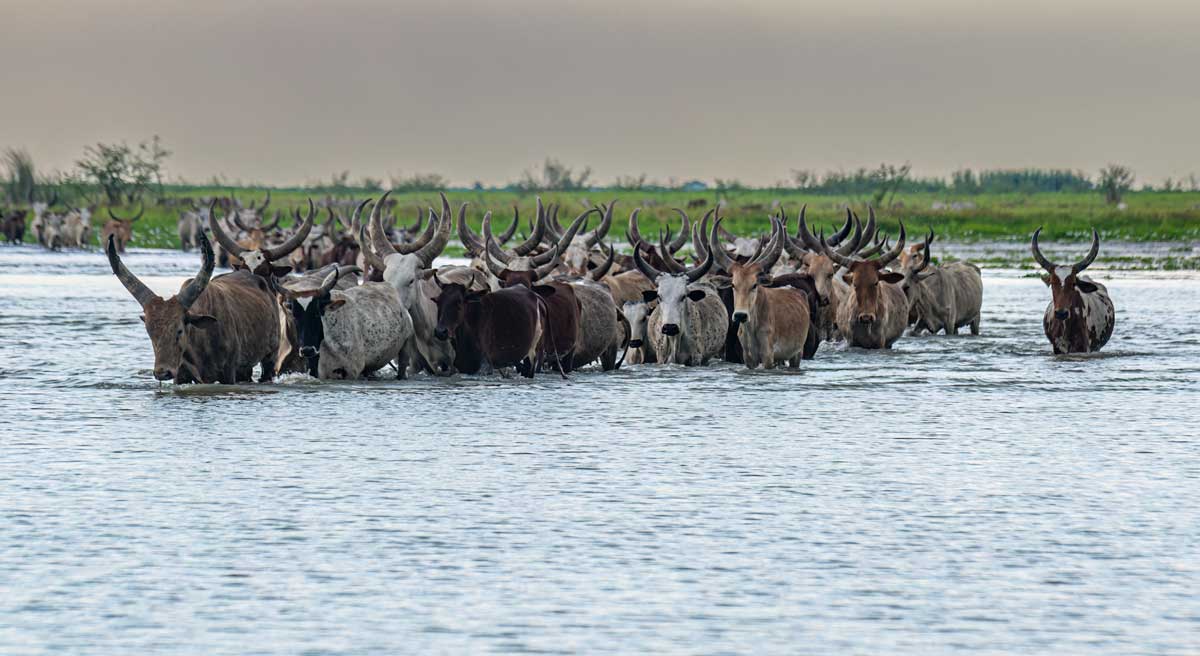
A herd of cattle walking through the water of Lake Chad. Photo by Michael Runkel / Robert Harding via AFP
According to these accounts, to manage this, ISWAP sometimes accepted the cash equivalent of the cattle directly from pastoralists. At other times, it entrusted the animals to herders, who transported them to markets—primarily in Lagos—for sale before returning with the proceeds. According to sources, this arrangement exposed the group to significant financial risks, as herders were occasionally robbed of the cash or arrested by security forces while transporting it back to the Lake Chad Basin.
Using an estimated average cattle price in Lagos of approximately ₦1.325 million (about $970), the annual value of cattle zakat in Krenowa Wilaya alone could exceed ₦3.3 billion (approximately $2.4 million). This illustrates the scale of the group’s reliance on cash transactions and the financial risks associated with physically transporting large sums of money over long distances.
According to a former mid-level ISWAP commander, an ISWAP logistics operator in Krenowa, known as Mallam Ahmadu, persuaded the wilaya’s Wali, Abu Salim, that opening bank accounts would eliminate many of the risks associated with transporting large amounts of cash. Ahmadu reportedly travels frequently between the Lake Chad islands and cities across Nigeria and works closely with a senior ISWAP business coordinator based in Kano. As part of this arrangement, Ahmadu is said to have opened accounts with First Bank and OPay, the Chinese-owned fintech company.
After collecting cattle as zakat, ISWAP reportedly distributes the animals among the major pastoralists, who transport them from Monguno or Gamboru to markets in Lagos. Rather than paying cash for the cattle, buyers are given account numbers to pay the money into. This arrangement significantly reduces the risk of robbery or interception while moving cash from Lagos back to the Lake Chad Basin.
The former commander further stated that three other senior ISWAP commanders in Krenowa were issued OPay debit cards by Mallam Ahmadu, bringing the total number of OPay cards in the wilaya to four. Abu Salim, the Wali, is reportedly the only one with a First Bank debit card.
What this case shows
This case demonstrates one instance of an armed group responding to a specific financial shock by diversifying – into commodities, cross-border currency conversion, front businesses, and eventually formal banking – rather than by abandoning its existing cash-based system outright. The accounts gathered suggest these methods were used together and in ways that may have reduced some of the risks facing the group, though the evidence available here does not establish that this combination was centrally planned as a deliberately engineered system versus an emergent response built through trial, error, and opportunity.
For policymakers, the implication is clear.
Disrupting one financing method rarely eliminates terrorist financing does not necessarily eliminate an armed group’s access to value, and may prompt it to diversify into channels—commodities, livestock, informal networks, formal banking—that a policy focused narrowly on cash and currency may not anticipate.
The challenge is therefore not simply detecting suspicious transactions but understanding how insurgent organisations like ISWAP combine licit and illicit financial ecosystems into resilient hybrid models.
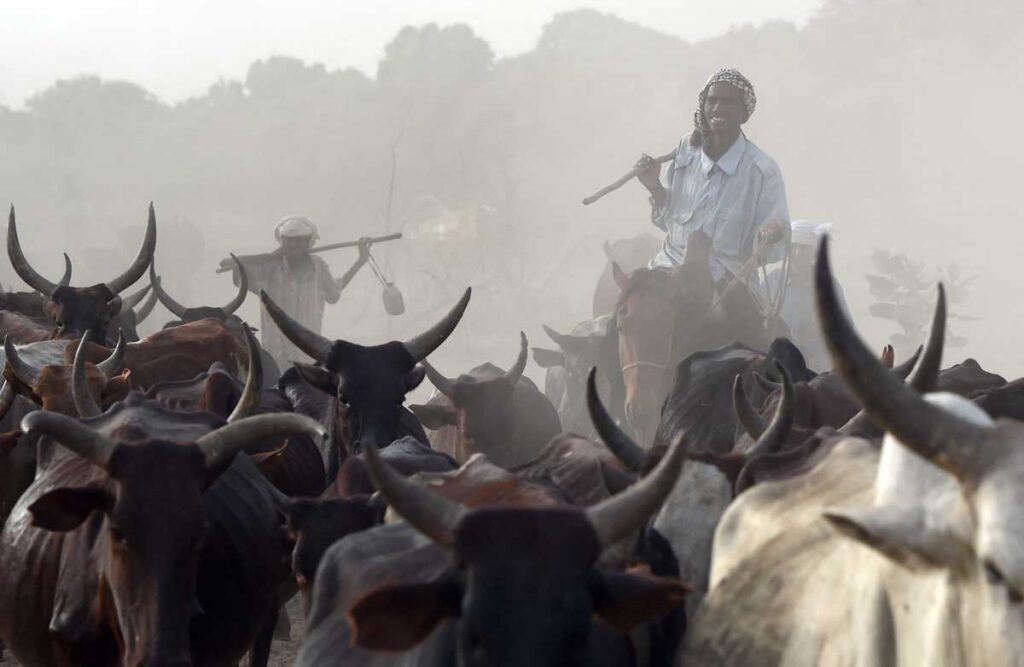
Cattle being herded close to the village of Guite in Chad’s lake region. Photo by Philippe Desmazes / AFP
Policy implications
The following measures are suggested by this case as areas worth examining further:
Financial intelligence efforts should go beyond traditional suspicious transaction monitoring to include value chains associated with livestock markets, agricultural commodity trading, and fuel distribution. These sectors represent potential interfaces between insurgent-controlled economies and legitimate commercial activities.
Greater integration between financial intelligence units and livestock market regulators could improve the identification of unusually large cattle transactions involving intermediaries with weak economic profiles or inconsistent business histories.
Banks and fintech companies should strengthen risk-based monitoring of accounts associated with high-value livestock trading, particularly where transaction patterns involve rapid deposits from commercial centres followed by cash withdrawals, transfers, or other activities from the accounts near conflict-affected border regions. Such monitoring should remain intelligence-led and proportionate to avoid blanket restrictions that could undermine legitimate pastoral livelihoods.
Nigeria, Cameroon, Chad, and Niger should deepen operational cooperation among financial intelligence units, customs authorities, and law enforcement agencies. Because insurgent financing routinely exploits cross-border trade, unilateral financial controls are unlikely to succeed without coordinated regional enforcement.
Investigators should increasingly follow commodity flows rather than cash alone. Food stocks, fuel supplies, and livestock may function not only as logistical assets but also as financial instruments capable of preserving value during periods of monetary disruption.
Also, customer due diligence should evolve beyond compliance requirements alone and the performative know-your-customer processes that seem mostly used now to tick boxes. Where financial institutions identify accounts facilitating unusually large commercial transactions that appear inconsistent with a customer’s documented occupation or financial history, enhanced scrutiny, supported by intelligence-led investigations and appropriate legal safeguards, can help detect misuse while protecting legitimate customers.

Malik Samuel is a senior researcher at Good Governance Africa-Nigeria. Before joining GGA, he was a researcher with the Institute for Security Studies, specialising in the Boko Haram conflict in the Lake Chad Basin Region. Malik also worked as a conflict researcher with Amnesty International Nigeria. He was also a Médecins Sans Frontières/Doctors Without Borders field communications manager in Northeast Nigeria. Before that, he was an investigative journalist at the Abuja-based International Centre for Investigative Reporting. Malik holds a Master's degree in Conflict, Peace, and Security from the Universitat Oberta de Catalunya and the United Nations Institute for Training and Research (UNITAR).