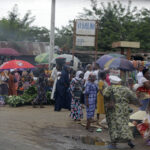
Sustainable Development Goal 7 (SDG 7) envisions universal access to affordable and clean energy by 2030 — a key driver of communities’ health, well-being and sustainable development. However, as noted by the United Nations, progress remains slow, with a significant part of the world’s population, particularly in sub-Saharan Africa’s rural communities, still lacking reliable access to this critical resource.
Findings from October 2025 fieldwork supported by the Southern Africa Trust (SAT) and undertaken by Good Governance Africa (GGA) and the Centre for Natural Resource Governance (CNRG) in Zimbabwe’s Mbire and Muzarabani districts underscore the depth of these challenges.
This research sought to ascertain rural communities’ experiences in navigating everyday energy needs amid rapidly shifting trends driven by climate change and the global energy transition.
The Mbire and Muzarabani districts are located in Zimbabwe’s Mashonaland Central province. In this region, Australian company Invictus Energy is exploring for an estimated 9.25 trillion cubic feet of gas and nearly 300 million barrels of oil.
The research findings highlight critical, community-centred insights for government and investors to build more inclusive and robust benefit-sharing frameworks with host communities.
Focus group discussions and key informant interviews revealed that sustainable, clean household energy options are limited, with energy use mainly determined by what is within reach and affordable for each household.
Communities are creatively navigating their local experiences of the energy transition through various energy mixes to meet their cooking, lighting, heating and gadget-powering needs.
These sources include electricity from the national grid, solar energy, gas, coal and firewood.
Electricity supply from the national grid was deemed unreliable due to persistent power cuts caused by dilapidated infrastructure, faults, and load shedding. These findings resonate with the 2024 Afrobarometer survey, which highlights Zimbabwean citizens’ dissatisfaction with electricity provision.
Some key survey findings revealed that a “slim majority (52%) of Zimbabweans live in zones served by the national grid … [with] fewer than one in 10 rural residents (8%) connected to the grid, compared with a large majority (69%) of urban residents. “Among those who are connected to the grid, only four in 10 say their electricity works ‘most of the time’ (34%) or ‘all of the time’ (6%).”
This unreliability was echoed by a respondent from Mbire’s Mushumbi Pools who, during an interview with GGA, stated: “Despite being connected to the electricity grid for many years, I primarily rely on solar power and gas for my household cooking and lighting needs. The national electricity supply is down for much of the year.”
Solar energy use is common throughout the Mbire and Muzarabani communities, with a panel or two installed around the yard or atop homestead buildings. Discussions revealed that for most households, solar energy is used for lighting, powering radios and charging cellphones, but only a few can afford high-capacity systems that enable them to meet household cooking needs.
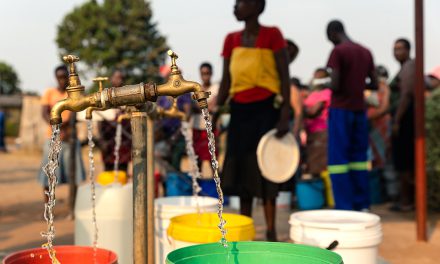
Women and girls bear the greatest burden of household energy sourcing, a reality that shapes both their preferences and everyday experiences. Discussions revealed a preference for gas despite concerns about its high cost, at US$2.50 a kilogram. Gas was identified as the most preferred energy source, while coal was noted as comparatively cheaper but, like firewood, an air pollutant.
According to the World Health Organisation (WHO), household air pollution was estimated to cause 2.9 million global deaths a year in 2021, including more than 309,000 deaths of children under five. Sub-Saharan Africa remains the most vulnerable: “Without strong policy action, 1.8 billion people are estimated to still lack access to clean fuels and technologies in 2030. There is a particularly critical need for action in sub-Saharan Africa, where population growth has outpaced access to clean cooking, and 923 million people lacked access in 2022.”
Firewood use was the most widespread, with respondents indicating that they considered it the most reliable alternative for meeting cooking needs. Firewood use highlights gender inequalities in time, labour and health risks linked to household energy sourcing, use and post-use cleaning.
Girls and women noted that these tasks largely fall on them, keeping them exposed to household air pollution and its health impacts. Discussions also revealed that although firewood use is widespread, access is increasingly difficult as it is prohibited by the Zimbabwe Environmental Management Agency (EMA) in measures to curb deforestation.
One respondent explained that deforestation had resulted in significant siltation along the Hunyani/Dande confluence. It also emerged that, in an effort to use less firewood, some households have built “tsotso stoves” into their kitchens. A tsotso stove is a simple structure built of concrete or clay — the term tsotso in Zimbabwe’s Shona language refers to dried twigs used as the primary fuel source.
A Muzarabani respondent explained, “…Tsotso stoves are energy efficient, generate more energy and release less smoke pollution than the traditional open fire. The larger open fire also requires more mature tree branches or logs. Tsotso stoves are environmentally friendly; they do not require the cutting of mature trees. Sometimes we pick dried twigs in the forest.”

The “tsotso stove”. Pic: EnviroPress
Tsotso stoves were initially introduced through the Ministry of Health and Childcare and the UNICEF Sustainable Energy for Health Facilities and Surrounding Communities Programme (SE4HF). With just four years to the SDG 2030 deadline, the energy experiences of households in Mbire and Muzarabani underscore the urgent need for government and multi-stakeholder interventions to achieve universal access. These findings offer insights into rural energy use that can inform pragmatic interventions to address communities’ energy needs while improving health, curbing environmental harm and promoting gender equality.
Sustainable energy systems can help set rural communities on a path to sustainable development. This is a key area in which extractive industry companies can compensate for the impact of their activities on host communities by investing in clean household energy systems that endure beyond the life of the extractive operation.
This article first appeared in Mail & Guardian.
Sikhululekile Mashingaidze entered the governance field in Zimbabwe while she was a part-time enumerator for the Mass Public Opinion Institute’s diversity of research projects during her undergraduate years. She has worked with the Habakkuk Trust, Centre for Conflict Resolution (CCR-Kenya), Mercy Corps Zimbabwe and Action Aid International Zimbabwe, respectively.

Farai Makururu
Farai Makururu is an experienced Governance Research Consultant with a strong background in Afrobarometer research.
Donald Nyarota
Donald Takudzwa Nyarota is a media and project management specialist currently leading media and advocacy work at the Centre for Natural Resource Governance (CNRG).