Less than a week after President Bola Tinubu declared a ‘nationwide security emergency’, the defence minister, Mohammed Badaru Abubakar, resigned, citing health issues. On the same day, the president met with the immediate past Chief of Defence Staff, General Christopher Musa (retired).
Less than 24 hours later, Gen Musa was nominated as the next defence minister, and the Senate confirmed his appointment the following day. These events unfolded as the Nigerian government faced mounting scrutiny and criticism, both internally and externally, over spiralling insecurity.
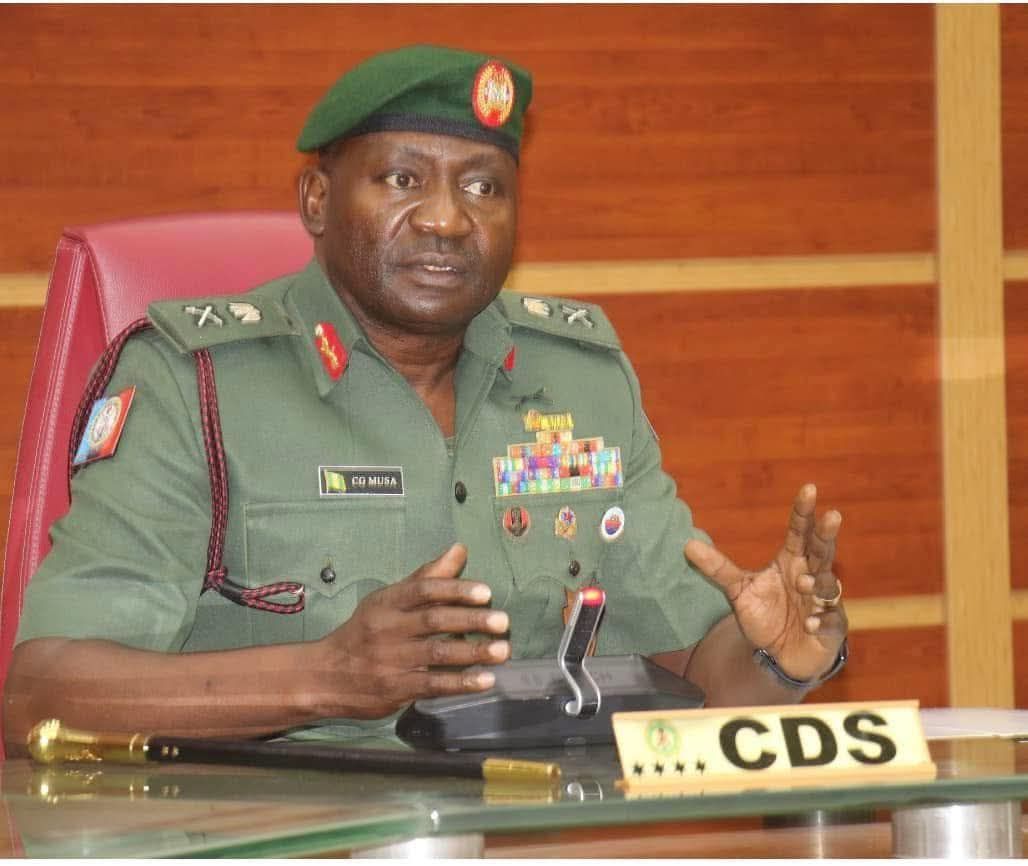
General Christopher Musa. Photo supplied.
A respected soldier steps into a critical role
The appointment of Gen Musa unsurprisingly generated widespread consensus across the country, particularly as his removal less than two months earlier as Chief of Defence Staff had surprised many Nigerians. Having retired at the peak of his military career, his appointment as Defence Minister is widely regarded as a continuation of a service record defined by discipline, professionalism, and operational experience.
Nigerians across different regions and political leanings have welcomed the development, noting that his previous command roles – particularly as Theatre Commander of Operation Hadin Kai, the counterinsurgency campaign against Boko Haram in the Northeast and the Lake Chad Basin – equip him with an understanding of the evolving nature of insecurity in ways few others, including his predecessor, possess.
His appointment comes at a time when Nigeria is experiencing one of its most challenging periods of insecurity since the return to civilian rule. Organised criminal networks, heavily armed bandit gangs and jihadist organisations continue to expand across northern Nigeria, while indicators suggest a creeping threat towards southern regions, particularly the Southwest. In this context, the arrival of a defence minister with deep operational knowledge has generated cautious optimism regarding the possibility of reshaping Nigeria’s security strategy.
A decision influenced by domestic and international pressures?
Gen Musa’s appointment did not occur in a vacuum. It followed heightened international scrutiny, particularly from the United States, which accused Nigeria of failing to halt what it described as a campaign of “Christian genocide.” Although the term remains contested and politically sensitive, it generated diplomatic and moral pressure on the Nigerian government to demonstrate seriousness in confronting insecurity, especially where violence carries religious undertones.
This appointment can be viewed from multiple lenses. Critics of the government have argued that individuals from one religious group have dominated key security positions. Besides the president and vice-president being Muslims, the national security adviser, former defence minister, minister of state for defence, and minister of police affairs are also Muslims. Under these circumstances, Gen Musa’s selection may be interpreted as an effort to balance perceptions of religious imbalance within the national security leadership. His origins from southern Kaduna – a region central to narratives of targeted violence against Christian communities – further reinforce this perception.
While some analysts view his appointment as a response to both international pressure and domestic criticism, there is broad agreement that his selection also reflects merit and recognition of his long-standing contributions to the armed forces.
A leader with institutional respect
General Musa enjoys considerable respect within both the military and political establishments. His professional rise was marked by senior command appointments across various theatres of conflict, providing him with exposure to counterinsurgency operations and joint-service coordination. Unlike some political appointees who struggle to earn the trust of military personnel, Musa is widely regarded as a “soldier’s soldier” – one who understands operational realities, troop morale and institutional culture.
This credibility may prove crucial as the defence sector undergoes scrutiny for issues including inadequate political oversight, procurement opacity, weak inter-agency coordination, and declining troop morale. A defence minister who combines political authority with operational understanding may help bridge the gap between political leadership and military execution, improving coordination and strengthening decision-making across the national security architecture.
The transition from military command to political leadership
Despite his strong operational credentials, Gen Musa now faces a fundamentally different responsibility. As Chief of Defence Staff, he operated within a command hierarchy where strategic authority rested with the Minister of Defence and the National Security Adviser. This meant that delays or setbacks could be partly attributed to political or bureaucratic constraints, even as ISWAP achieved significant operational successes during its tenure, overrunning more than 17 military bases during the Islamic State’s “Camp Holocaust” campaign.
However, as the defence minister, strategic direction and political oversight rest squarely on his shoulders. The success or failure of defence policy will now be directly linked to his judgment, his ability to navigate political realities, and his influence within the cabinet. The military is ultimately only as strong as the political leadership that guides it, since capability is shaped not only by combat performance but by coherent policy, effective oversight, and strategic direction from the civilian leadership.
This shift from soldier to statesman presents new challenges. He must engage governors, repair fractured inter-agency relations, negotiate with international partners, and oversee a procurement system marked by opacity and corruption. These are domains characterised by competing interests and bureaucratic complexities. His role now demands long-term strategic thinking, including reforms to the structure, accountability mechanisms, resource allocation, and defence management.
Nigeria’s deepening and evolving national security crisis
Overlapping crises drive Nigeria’s security deterioration. Banditry and terrorism have entrenched themselves across the Northeast, Northwest and Northcentral regions, where armed groups have established parallel governance structures in rural areas. Their integration into the extractive economy, particularly gold mining, has enabled them to access significant financial resources. Research by GGA Nigeria documents testimonies of bandits trading gold for weapons through networks in Algeria, Mali and Libya, revealing the transnational dimension of the threat.
Simultaneously, jihadist organisations are exploiting the disorder created by banditry. Their presence is increasingly visible beyond the Northeast, with the Sahel-originated Jama’at Nusrat al-Islam wal-Muslimin (JNIM) announcing operations in Northcentral Nigeria. At the same time, Lakurawa continues to spread across Sokoto, Kebbi, Niger and Zamfara. Because incidents in the Northwest and Northcentral are routinely attributed to “bandits” without detailed interrogation, jihadists can operate covertly, complicating early detection and blurring distinctions between actors.
To make meaningful progress, Gen. Musa must articulate a strategy that differentiates criminal, extremist and hybrid threats while strengthening intelligence coordination.
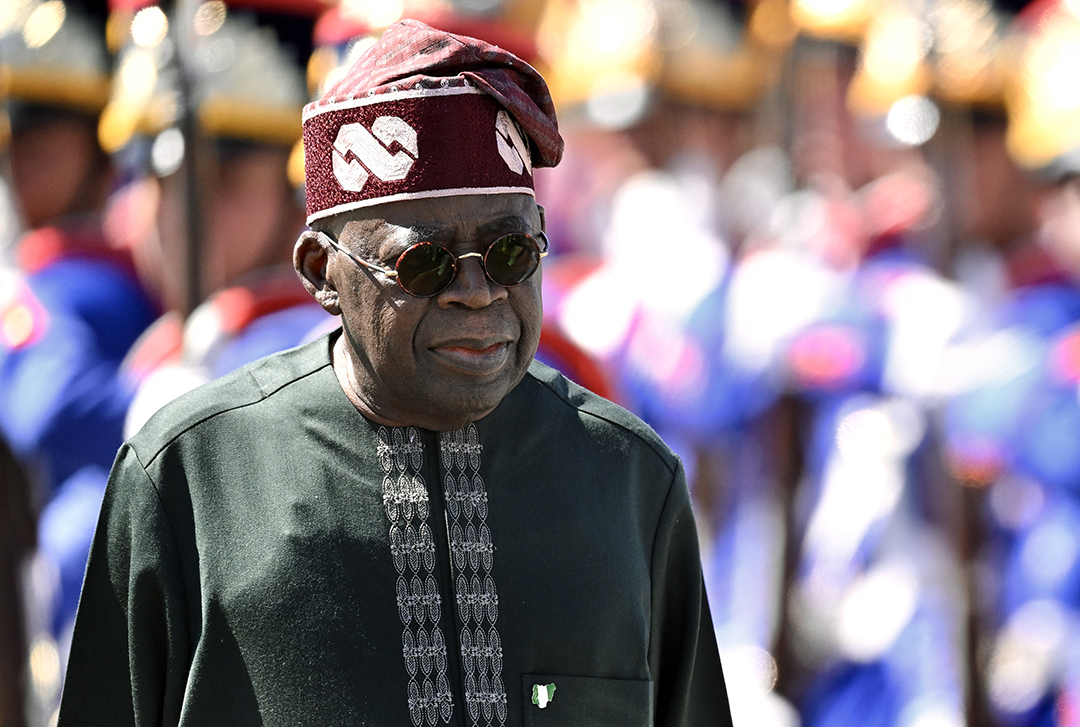
Nigeria’s President Bola Tinubu in Brasilia, on August 25, 2025. (Photo by EVARISTO SA / AFP)
Addressing political complicity in insecurity
One of the minister’s most urgent and sensitive challenges is confronting networks of political protection surrounding major bandit figures like Ado Alero, who, following the death of Halilu Sububu, has emerged as a significant rallying point for bandit alliances. He is linked to many major attacks in the Northwest, either directly or through intelligence support. His alleged political patronage, particularly among northern politicians, poses a significant threat to Nigeria’s security architecture.
Research by GGA Nigeria indicates that Ado Alero masterminded the recent abduction of 25 schoolgirls from Maga, Kebbi State, planned four months earlier in retaliation for arrests of his associates. After the kidnapping, intermediaries connected to a serving senator reportedly initiated negotiations with him, promising to secure the release of detainees in exchange for the girls’ safe return.
On the day of Gen Musa’s nomination, information available to GGA Nigeria showed that most detained associates of Alero had been freed, alongside substantial financial compensation to the bandits to cover logistical costs of abducting the girls. Sources further report that the girls were received by a team led by the senator around Bagega, in the Anka local government area of Zamfara State.
Such interference, where political actors facilitate the release of criminal elements, undermines security operations, damages morale, and erodes public trust. Restoring confidence will require confronting political complicity and holding accountable those who obstruct or exploit security operations.
The need for a more robust and sustained operational approach
Nigeria’s current tactical model relies heavily on sporadic operations, with daytime patrols that armed groups exploit by vacating hideouts and returning when troops withdraw. Consequently, large forest corridors across Zamfara, Katsina, Kaduna, Niger and parts of Kebbi remain under the de facto control of non-state actors.
Short-term improvement requires a shift towards permanent forward deployment, round-the-clock operations, joint tasking, and sustained territorial occupation. Establishing forward operating bases, integrating intelligence into every phase, and closing state-boundary escape routes are essential steps.
Long-term security, however, depends on addressing the structural drivers of violence before they escalate into physical conflict. Here, governors must lead in extending governance to rural communities, building resilience and reducing the appeal of violent groups.

Malik Samuel is a senior researcher at Good Governance Africa-Nigeria. Before joining GGA, he was a researcher with the Institute for Security Studies, specialising in the Boko Haram conflict in the Lake Chad Basin Region. Malik also worked as a conflict researcher with Amnesty International Nigeria. He was also a Médecins Sans Frontières/Doctors Without Borders field communications manager in Northeast Nigeria. Before that, he was an investigative journalist at the Abuja-based International Centre for Investigative Reporting. Malik holds a Master's degree in Conflict, Peace, and Security from the Universitat Oberta de Catalunya and the United Nations Institute for Training and Research (UNITAR).