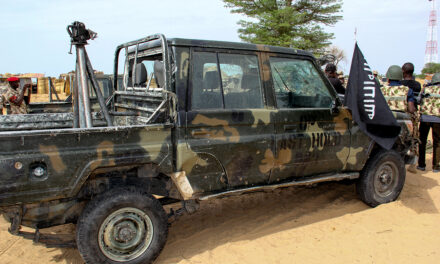
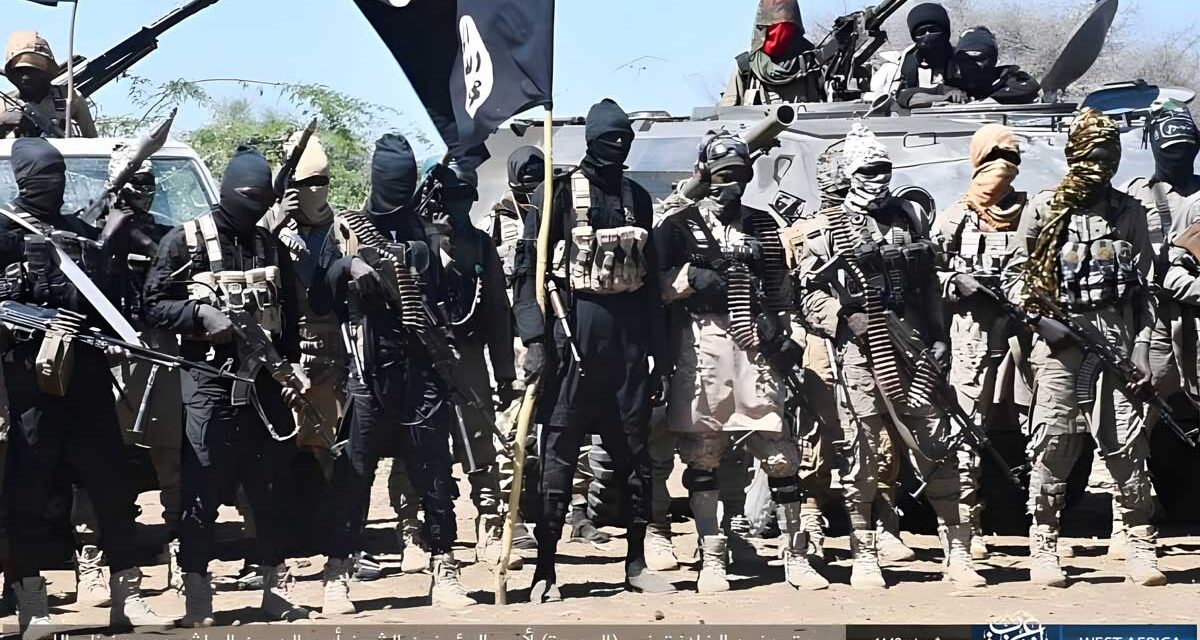
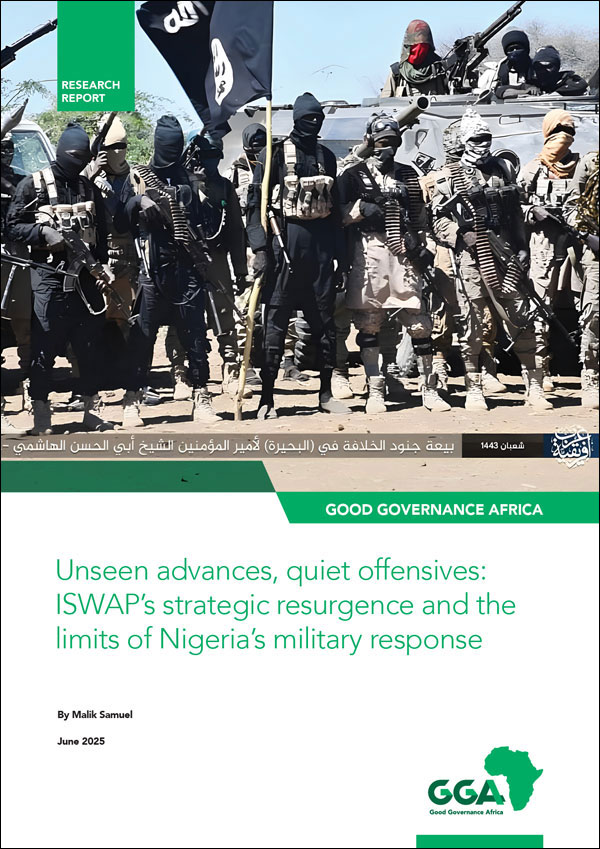
This report examines emerging evidence of a potential resurgence of Boko Haram, particularly its Islamic State-aligned faction, the Islamic State West Africa Province (ISWAP), following a period of relative decline. Indicators of renewed activity include a significant increase in attacks across northeast Nigeria and the Lake Chad Basin, with over 300 incidents recorded in 2025 alone. ISWAP has overrun at least 16 military bases in the first half of the year, showcasing enhanced tactical sophistication, drone usage, coordinated offensives, and presence of foreign fighters. These developments reflect improved logistics, reorganisation of ISWAP’s territorial command structure, and sustained external support from ISIS central.
ISWAP’s strategic recalibration appears to be driven in part by intra-ISIS competition and an ambition to reaffirm its position as a leading franchise. The group has intensified propaganda campaigns and scaled up recruitment, particularly targeting youth in underserved communities and across West Africa and the Sahel. Socioeconomic grievances, chiefly unemployment and lack of education, continue to serve as enablers of violent extremism. Insecurity has been further compounded by the withdrawal of Niger from the Multinational Joint Task Force (MNJTF), weakening regional coordination.
Despite efforts such as Borno State’s reintegration and CVE strategies, current military and policy responses remain largely reactive and insufficiently informed by the evolving dynamics of the insurgency. The report underscores the need for a multifaceted approach, combining strengthened military capacity with regional cooperation and addressing the root causes of recruitment and radicalisation.

Malik Samuel is a senior researcher at Good Governance Africa-Nigeria. Before joining GGA, he was a researcher with the Institute for Security Studies, specialising in the Boko Haram conflict in the Lake Chad Basin Region. Malik also worked as a conflict researcher with Amnesty International Nigeria. He was also a Médecins Sans Frontières/Doctors Without Borders field communications manager in Northeast Nigeria. Before that, he was an investigative journalist at the Abuja-based International Centre for Investigative Reporting. Malik holds a Master's degree in Conflict, Peace, and Security from the Universitat Oberta de Catalunya and the United Nations Institute for Training and Research (UNITAR).