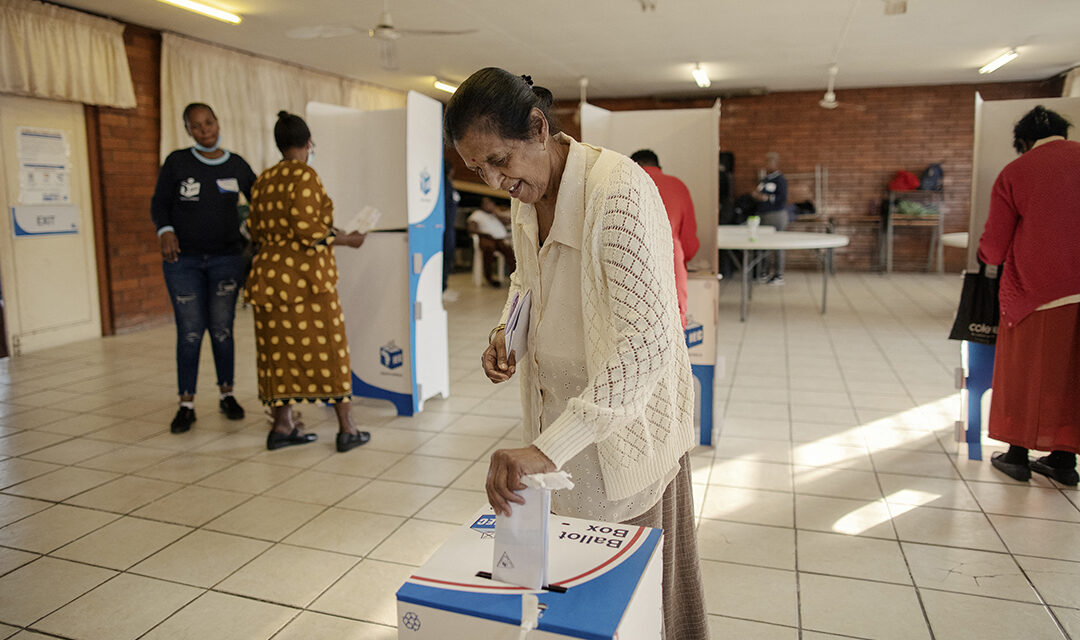
The ballot is not just a right; it is a responsibility. By rejecting leaders who exhibit arrogance, intolerance, dishonesty and disregard for the rule of law, South Africans can safeguard their democracy and contribute to a more stable and just worldThe ballot is not just a right; it is a responsibility. By rejecting leaders who exhibit arrogance, intolerance, dishonesty and disregard for the rule of law, South Africans can safeguard their democracy and contribute to a more stable and just world.
Recently, I watched a Munk Debates podcast in which the invited expert spoke about the frustration that America cannot rein in President Donald Trump and his catastrophic decisions. A thought occurred to me: What if a Trump-like leader ever emerged in South Africa? What can we do, as citizens, to avoid giving the keys of the Union Buildings to such a leader?
South Africa’s democratic project — born out of immense sacrifice and codified in what has been called one of the most progressive constitutions in the world — depends not only on institutions but on the vigilance of its citizens. As history shows, democracies rarely collapse overnight. They erode gradually when voters normalise dangerous leadership traits.
The global experience, particularly under Donald Trump, offers a cautionary tale showing that charismatic and populist leaders with anti-democratic tendencies can destabilise institutions, polarise societies and undermine global cooperation. The responsibility, therefore, rests squarely on voters to identify and reject such tendencies before they take root.
As I see it, the conditions that led many American voters to elect Donald Trump twice were shaped by a convergence of economic anxiety, feelings of cultural dislocation and deep distrust of political institutions. In the years following the 2008 global financial crisis, and now after the Covid pandemic, many working- and middle-class communities experienced stagnant wages, job losses and a sense that globalisation had benefited elites while leaving them behind.
This economic frustration was compounded by declining trust in establishment politicians — both Democratic and Republican — and created fertile ground for an outsider who positioned himself as a disruptor of what they believed was a “rigged system”. Trump’s populist messaging resonated with voters who felt ignored, disrespected or economically marginalised.
The result was a powerful, grievance-driven coalition willing to overlook personal and institutional concerns in favour of a leader who appeared to channel their anger and offer simple, decisive solutions to complex problems. South Africans also have many grievances, creating fertile ground for people to ignore warning signs even when they see them in leaders.
In my observation, the following are some of the most dangerous and undemocratic tendencies that voters must look out for in the behaviour of leaders.
A hallmark of authoritarian-leaning leadership is excessive or almost narcissistic self-belief coupled with disdain for accountability. These are people who lash out at the slightest sign of someone asking them difficult questions. They overwhelm their questioners with vitriol and attacks. These are leaders who present themselves as uniquely capable — above criticism or correction — and create a culture where dissent is viewed as disloyalty. This erodes democratic norms, where leadership is meant to be servant-based and accountable to the people.
Healthy democracies thrive on debate. Leaders who ridicule, silence or delegitimise opposing voices weaken democratic discourse. When disagreement is framed as betrayal, institutions such as Parliament, the judiciary and the media are cast as enemies rather than partners in governance. Over time, this fosters fear and conformity instead of robust engagement.
Competent leadership requires diversity of thought. Leaders who deliberately appoint loyalists over qualified, independent thinkers hollow out governance structures. This leads to poor decision-making, corruption risks and institutional decay.
As political scientist Hannah Arendt warned in her seminal work, The Origins of Totalitarianism, authoritarian systems thrive when critical thinking is replaced by blind loyalty.
Perhaps the most dangerous trait is a willingness to undermine the Constitution and democratic institutions, especially when leaders disagree with them. This includes attacking the judiciary, ignoring legal constraints or attempting to manipulate electoral processes.
South Africa’s constitutional democracy is its strongest safeguard, and any leader who treats it as an obstacle rather than a foundation poses an existential threat. Consistency in policy reflects clarity of vision. Leaders who frequently change positions based on political convenience rather than principle or evidence create uncertainty in governance. This unpredictability confuses citizens, destabilises markets, weakens investor confidence and erodes public trust.
Democracy depends on informed citizens, who are critical for advancing Good Governance Africa’s theory of change: strengthening government effectiveness and empowering citizens to hold their governments to account creates the space for broad-based development to thrive.
Leaders who spread misinformation, distort facts or undermine credible institutions create confusion and division. As philosopher Yuval Noah Harari notes, when truth itself becomes contested, societies lose their ability to solve collective problems.
South African voters must therefore move beyond personality-driven politics and adopt a more disciplined, evidence-based approach to leadership evaluation:
- Track behaviour over time: Do not rely on campaign rhetoric. Examine a leader’s historical conduct, including how they have treated institutions, critics and the law;
- Assess their team: Who do they appoint or surround themselves with? Competence and independence in their circle are strong indicators of governance quality;
- Evaluate respect for institutions: Watch how they speak about the judiciary, Chapter Nine institutions, political opponents and the media. Persistent ad hominem or baseless attacks are red flags;
- Demand policy consistency: Scrutinise whether their positions are stable and grounded in principle or reactive and populist;
- Check credibility: Verify claims using independent media and fact-checking organisations. A pattern of dishonesty should disqualify any candidate;
- Engage actively: Participate in civic forums, public debates and community discussions. Democracy requires active citizenship, not passive observers, and
- Check leadership experience: What experience do they have in ethical and excellent leadership?
The potential dangers for South Africa, Africa and the world:
1. Institutional collapse
South Africa’s democratic institutions — already under pressure — could be further weakened. Once institutions are ruptured, captured, or discredited, reversing the damage becomes exceedingly difficult, as evidenced by the country’s experience of state capture and the subsequent failure to hold perpetrators to account despite the expensive Zondo commission.
2. Economic instability
Erratic policy decisions and disregard for the rule of law deter investment, weaken the currency and increase unemployment. Economic decline disproportionately affects the most vulnerable. For example, supporters of this argument point to the perceived negative ramifications of President Trump’s actions towards Iran on the global economy.
3. Social fragmentation
Polarising rhetoric can inflame racial, ethnic and class divisions in a country still healing from apartheid. This threatens social cohesion and national unity.
4. Continental repercussions
As one of Africa’s leading economies and diplomatic voices, South Africa plays a critical role on the continent. A destabilised South Africa would weaken regional cooperation and development efforts.
5. Global isolation
In an interconnected world, respect for democratic norms is essential for international partnerships. A leader who undermines these norms risks alienating key allies, weakening trade relations and diminishing South Africa’s global influence.
The experience of the United States demonstrates that even mature democracies are not immune to erosion. Despite institutional safeguards, political polarisation and partisan loyalty have at times prevented effective checks on executive overreach. The lesson is clear: institutions alone are not enough — citizens must act as the first line of defence.
South Africa’s history makes this responsibility even more urgent. The country emerged from apartheid through a collective commitment to dignity, accountability and constitutionalism. To allow these gains to be undermined by poor leadership choices would not only betray that legacy but also endanger future generations.
Democracy is not self-sustaining. It requires informed, vigilant and courageous voters who prioritise principle over personality.
The ballot is not just a right; it is a responsibility. By rejecting leaders who exhibit arrogance, intolerance, dishonesty and disregard for the rule of law, South Africans can safeguard their democracy and contribute to a more stable and just world. Otherwise, we may find Trump-like characters running South Africa and shaping our lives.
This article first appeared in Mail & Guardian.

Lonwabo Patrick Kulati serves as the CEO of Good Governance Africa (GGA) for the Southern Africa region, leading efforts to advance ethical leadership and good governance across the continent. Holding a Master’s degree in Public Policy from the University of Stellenbosch and many years of leading organisations, Kulati is a recognised expert in ethical governance, leadership, sustainable development, and human-rights-based policy analysis. As the author of the book A Gap in the Cloud and a prolific contributor to leading newspapers, radio and TV stations, he shapes critical conversations on leadership, governance, and Africa’s growth trajectory. A sought-after keynote speaker who has spoken all over Africa, Kulati is acclaimed for his transformational leadership insights and commitment to driving authentic ethical practices at the highest levels of government and business.