While some applaud the deployment of the South African National Defence Force (SANDF) into X for the purpose of Y, this should not be mistaken for the approval of democratic governance. Instead, it is indicative of governance fatigue.
The credibility and integrity of legal authorities are fundamental to the stability, legitimacy, and functional capacity of the state. Law enforcement institutions, particularly the police, sit at the core of this relationship. The Madlanga commission has exposed the troubling disregard for legal norms by individuals entrusted with upholding and institutionalising the rule of law.
This signals not merely individuals’ misconduct but a broader institutional erosion that risks normalising impunity at elite levels of governance. Moreover, if elite actors entrusted with safeguarding the rule of law appear compromised, the consequences reverberate throughout the state-society relationship. Public trust in law enforcement becomes a critical barometer of whether citizens perceive the state as legitimate, impartial, and effective.
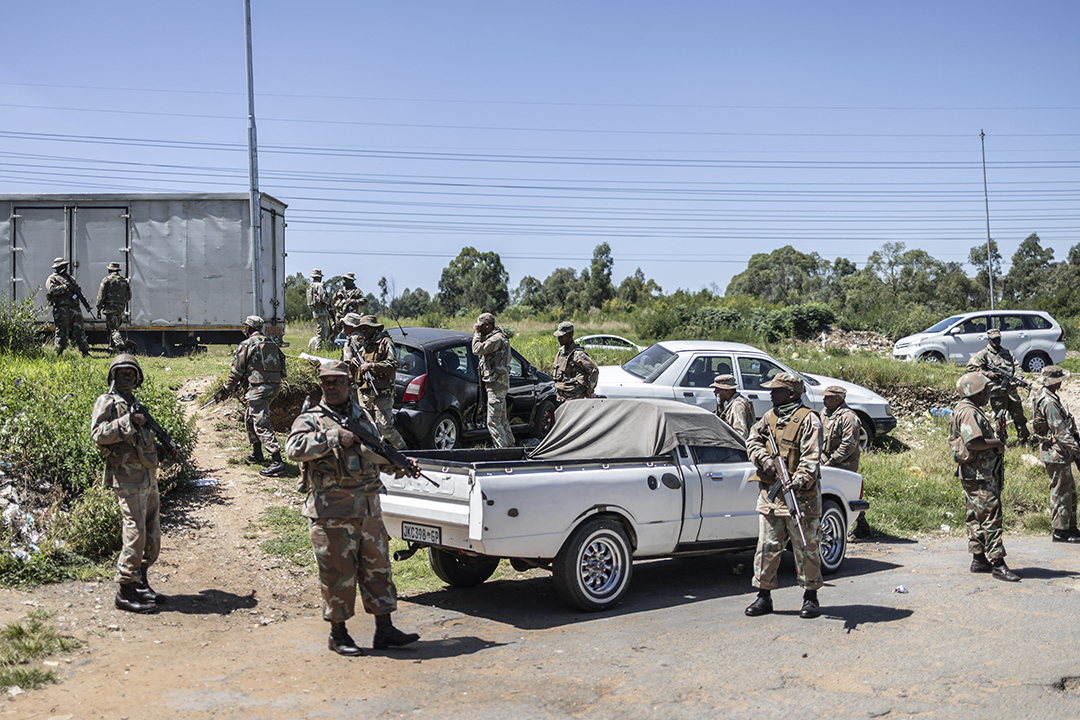
South African National Defence Force soldiers patrol during an operation in Riverlea, near Johannesburg, on March 11, 2026. Soldiers moved into gang-violence hotspots in Johannesburg on 11 March 2026, to support police efforts to tackle rampant crime, described by President Cyril Ramaphosa as one of the biggest threats facing South Africa. Photo by ILARIA FINIZIO / AFP
Such developments mirror and potentially intensify a legitimacy crisis in the way police services interact with the public, itself exemplary of the broader state-society relationship. When those responsible for enforcing the law appear detached from legal and ethical standards, public trust in institutions weakens, undermining voluntary compliance and cooperative governance.
The Human Sciences Research Council (HSRC), through its South African Social Attitudes Survey (SASAS), has consistently tracked public perception of crime and policing since 2003. These longitudinal data provide an important lens through which to assess whether elite-level institutional decay translates into declining public confidence in law enforcement and the state more broadly.
Figure 1 below illustrates public confidence in the South African Police Service (SAPS) between 2000 and 2024/25. Over this 25-year period, confidence in the police has never exceeded 50%, indicating a persistent structural trust deficit rather than episodic dissatisfaction. This suggests that reform efforts have not fundamentally altered public perceptions of police legitimacy.
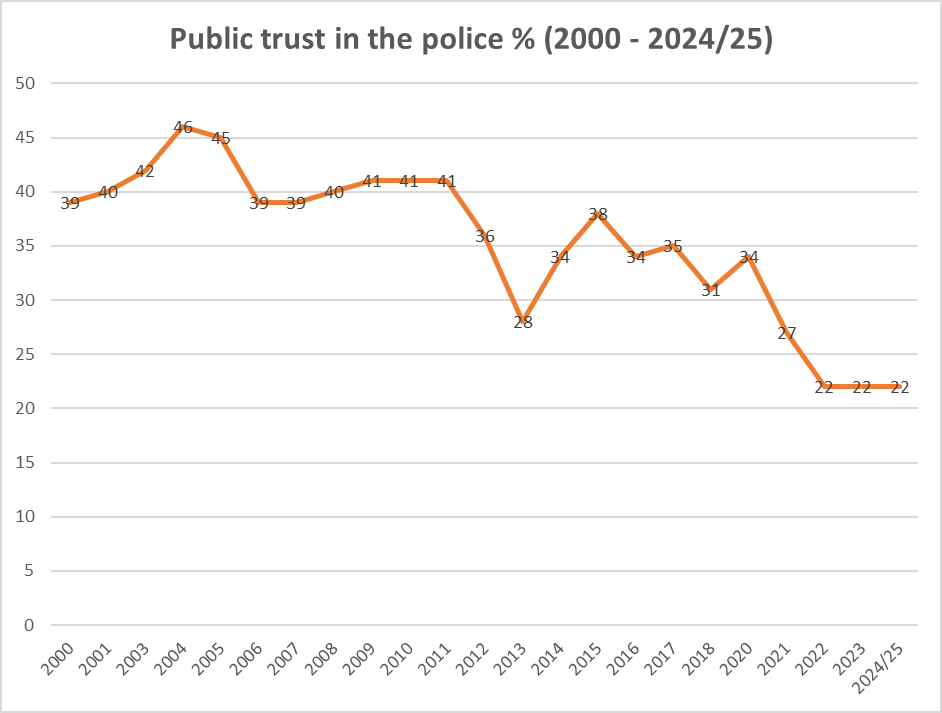
Figure 1. Source: HSRC SASAS 2003-2024/25; Graphic by: Mmabatho Mongae
Confidence declined sharply from 41% in 2010 to 28% in 2012, a period marked by escalating concerns over political interference in law enforcement and broader governance deterioration. While trust modestly recovered to 38% by 2014, this rebound did not represent institutional consolidation. Rather, it may reflect shifting political leadership and heightened public visibility of accountability mechanisms, including the Zondo Commission Inquiry into state capture.
The subsequent decline from 34% in 2018 to 22% in 2021 corresponds with widespread criticism of policing during the July 2021 unrest, reinforcing the sensitivity of public trust to institutional performance during crisis moments. Confidence has since stagnated, suggesting entrenched scepticism rather than cyclical fluctuation.
The Madlanga Commission has since laid bare the depth of organised crime’s infiltration into the police service, blurring the line between enforcer and offender. In such circumstances, distrust is not merely emotional – it is structural. Provincially, no province recorded trust levels above 30% in 2024/25, highlighting the national depth of the legitimacy deficit. Such persistently low confidence in a coercive arm of the state signals a structural challenge to the consolidation of the rule of law and voluntary compliance – both foundational to democratic stability. Almost all academic literature indicates that state monopoly over the use of violence is a fundamental condition for attaining stability.
Persistently low confidence in the police does not occur in a vacuum. When trust in civilian law enforcement deteriorates, political leaders face mounting pressure to demonstrate control and responsiveness.
It is within this context that President Cyril Ramaphosa announced during the 2026 State of the Nation Address (SONA) the deployment of the South African National Defence Force (SANDF) to help tackle illegal mining and gang violence. While some have welcomed this decision, the reliance on military intervention may reflect not satisfaction with governance performance, but rather diminished confidence in the state’s civilian law enforcement capacity.
Militarised responses can provide short-term stabilisation, yet they also signal institutional substitution – where one arm of the state compensates for perceived weaknesses in another. Yet the SANDF has hardly demonstrated that it can sustainably uproot illegal mining operations or sever their deep entanglement with violent organised crime. Past deployments have yielded short-term visibility but limited structural change, raising questions about whether military intervention compensates for, rather than resolves, failures within policing and prosecutorial institutions.
Public issue salience further contextualises this legitimacy crisis. While crime and security (35%) rank among major concerns, unemployment (55%) remains the dominant public priority, followed by water supply (31%), infrastructure (28%), and corruption (21%). This order suggests that dissatisfaction with policing operates within a broader governance performance deficit, where economic insecurity and service delivery failures compound institutional mistrust.
While military deployment may offer short-term stabilisation, repeated reliance on securitised responses can reshape public expectations about authority. Over time, the boundary between civilian policy and military intervention becomes less distinct, potentially altering how citizens evaluate acceptable forms of governance.
Afrobarometer data suggest that such attitudinal shifts may already be underway. For the first time since the survey began in South Africa 25 years ago, respondents’ support for military rule now exceeds opposition. Between 2022 and 2025, support increased sharply from 28% to 49%, compared to a low of 16% in 2011. This surge coincides with historically low levels of public trust in the police, suggesting that dissatisfaction with civilian law enforcement may be shaping openness to alternative forms of authority.
While causality cannot be definitively established, the growing normalisation of military deployment in domestic security contexts may shift public attitudes. The SANDF played a visible role during the strict Covid-19 lockdown in 2020, and was deployed in 2019 to parts of Cape Town, specifically in Townships experiencing heightened gang violence. Repeated reliance on the military in response to crime may, over time, desensitise citizens to its domestic presence. For residents in high-crime communities, the military may symbolise immediate security rather than democratic risk.
Rising openness to military rule does not emerge solely from exposure to securitisation. It is embedded within broader socioeconomic frustrations that shape how citizens interpret democratic performance. Persistent corruption, weak accountability, and inadequate responses to poverty and unemployment signal governance failure. These conditions create fertile ground for authoritarian appeals, identity-based exclusion, and populist mobilisation. When democratic institutions are perceived as incapable of delivering security and economic opportunity, citizens may prioritise order and performance over procedural norms.
Strong econometric evidence indicates that democratisation causes economic growth. Typically, that growth generates a robust middle class that, in turn, sustains democratic consolidation, partly because the middle class invests in education and institutions. This serves as a buffer against populist exploitation of grievance. In South Africa, however, weak democratisation has failed to deliver the kind of economic engine required to build a robust middle class. Persistent inequality and rising poverty in the midst of deteriorating education outcomes make citizens both susceptible to being exploited by populists and expand their appetite for military rule.
The state’s inability to address socioeconomic grievances does not merely erode voter confidence; it reshapes political competition. It enables both right- and left-wing populists to frame complex structural problems as cultural or identity conflicts – particularly around migration, ethno-nationalism, and belonging. In this context, reliance on military deployment is a symptom-management strategy rather than a solution to underlying governance deficits.
Taken together, these trends – declining institutional trust, declining police legitimacy, rising openness to authoritarian alternatives, and increasing reliance on military intervention- suggest not isolated governance failures, but a strain within the democratic social contract itself.
While South Africa remains formally democratic, shifts in public attitudes suggest increasing openness to non-democratic alternatives when democratic performance is perceived as inadequate. Restoring institutional credibility, particularly within law enforcement, is therefore not only a matter of crime control but central to safeguarding democratic resilience.
This article first appeared in Business Day.

Dr Mmabatho Mongae is the acting head of the Governance Insights and Analytics programme at Good Governance Africa (GGA), where she plays a key role in developing innovative, data-driven tools to improve governance and urban management across the continent. Her work includes the Governance Performance Index (GPI) and the African Cities Profiling Project, an initiative aimed at building a comprehensive information bank to assist cities in enhancing service delivery for both citizens and enterprises.
With a PhD in International Relations from the University of the Witwatersrand and as a research fellow at the Centre for Africa-China Studies, Mmabatho’s work bridges rigorous academic research with real-world policy challenges. Before joining GGA, Mmabatho lectured in International Relations at Wits University and received a 2025 M&G 200 Young South Africans award.