Amid mounting criticism of United Nations peacekeeping missions and Western military involvement, many African governments have sought alternative security partners — private military companies, local militias and several regional partnerships such as the Alliance of Sahel States and Multinational Joint Task Force around the Lake Chad Basin.
In the eyes of many scholars and practitioners, these partnerships challenge long-standing normative preferences for multilateral and regional institutions, namely the African Union and its regional economic communities.
These institutions have long been lauded for their mandates to preserve the sovereignty of cooperating states and develop collective legitimacy in African governance. In practice, however, consensus-building has frequently led to slow deployment timelines and gross operational inefficiencies on the ground.
While operational successes under multilateral institutions do exist, they are more often exceptions and are vastly outpaced by the decisive responses demanded by Africa’s security crises.
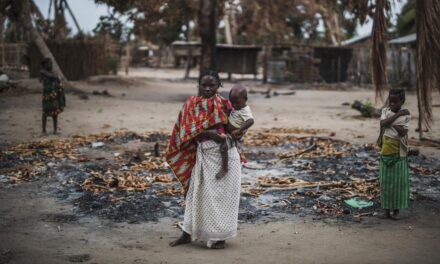
Kigali’s bilateral agreements with Maputo and Bangui are underpinned by mining ventures. Photo: Simon Wohlfahrt/AFP
Against this backdrop, Rwanda’s recent forays into bilateral security agreements mark a significant departure from Africa’s status quo.
Kigali’s deployments to the Central African Republic (CAR) in 2020 and Mozambique in 2021 challenge both conventional norms and institutional habits. The relative success of these deployments, especially in contrast with their multilateral equivalents, raises a fundamental question of African security cooperation.
As more states pivot toward bilateral partnerships, is it time to recalibrate Africa’s security architecture? If so, what normative and legal frameworks must accompany this shift to prevent entrenching patterns of dependency and personalised security politics?
Once a recipient of international peacekeeping itself, Rwanda has since become a frequent contributor to peace and security operations in Africa. As a post-genocide state, it carries a unique moral authority on matters of civilian protection. Kigali has sought to amplify this influence through its vocal advocacy for the robust defence of endangered civilians, being one of three countries to co-sponsor a United Nations appeal, known as the Kigali Principles, in 2015.
The country’s foreign policy took a more assertive turn in late 2020, when Kigali dispatched troops to the CAR to counter an insurgent offensive against the capital.
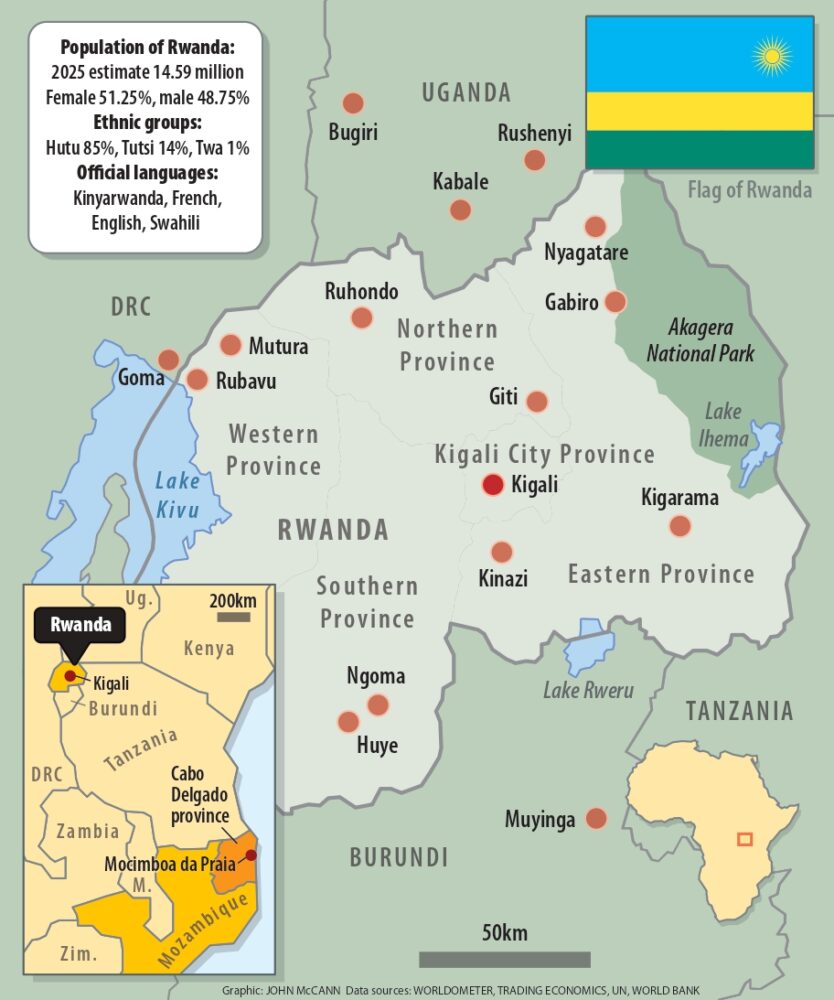
Only a few months later, in mid-2021, Rwandan troops deployed to Mozambique’s Cabo Delgado province. Rwanda was engaged through a bilateral agreement and therefore free to operate outside any pre-existing multilateral mandates or rules of engagement.
From the onset, Rwandan troops were engaged in offensive operations to reclaim insurgent-held territory, including the port town of Mocímboa da Praia. Subsequent campaigns saw Rwandan forces push deeper into Ahlu Sunna Wa Jama (ASWJ) strongholds, including in an eight-day campaign along the Messalo River to capture a key base in Mbau and later joining the Southern African Development Community (SADC) Mission in Mozambique (SAMIM) for a coordinated assault in Macomia.
Despite its emphasis on kinetic, offensive engagements, Rwanda also placed importance on developing a rapport with the local population. This involved taking on various community activities, including static engineering projects and the delivery of healthcare services in remote villages, as well as more dynamic security measures such as accompanying at-risk smallholders to provide protective overwatch while crops were being tilled.
These efforts brought troops into close proximity with local populations, who became vital sources of real-time intelligence on insurgent movements.
Very few, if any, African interventions have simultaneously managed to secure territorial gains, minimise civilian casualties and sustain their engagement with local populations.
(Graphic: John McCann/M&G)
In contrast to the operational successes attributed to Rwandan forces, the SAMIM struggled with fragmented command structures, logistical inertia and restrictive rules of engagement. In some instances, troops were confined to their forward operating bases, which severely undermined their effectiveness and all but ruled out any possibility of battlefield gains.
In a move that clearly favoured its bilateral partnership with Rwanda, Mozambique did not establish a joint command structure to enable coordination or intelligence sharing among the various security partners.
Although the agreements themselves are known only to the countries’ top leadership, Rwanda’s commercial interests in the CAR and Mozambique hint at potential motives for its involvement.
Crystal Ventures, the commercial wing of Rwanda’s ruling party, has rapidly expanded its operations in the CAR and Mozambique through its subsidiary companies in recent years. Vogueroc Mining, a firm reportedly backed by Crystal Ventures, received government approval in 2022 to explore mineral licences at five sites in the CAR.
In Mozambique, a joint venture between Rwanda’s Isco Segurança and a local firm won a contract from TotalEnergies to secure $20 billion in LNG infrastructure. Another Crystal Ventures-linked company, Strofinare Mozambique, began exploring graphite deposits near Ancuabe in 2021, a region strategically close to Rwandan operational bases.
This suggests a dual-track strategy that blends security assistance with economic diplomacy, both of which increase Rwanda’s leverage with the external financiers of its deployments. While the European Union and France foot most of the bill, Mozambique pays only a small amount directly to Kigali in exchange for its security services.
The deficit, it seems, is made up with commercial concessions. Rwanda is not the only African state engaging in such dual-track diplomacy, but it is quickly becoming one of the most effective.
While various explanations have been offered for Rwanda’s successes in the CAR and Mozambique, its interventions signify more than just operational efficiency. They coincide with a growing trend among African states to act through bilateral agreements, bypassing the AU and its regional blocs.
This reflects a global shift from multilateralism to ad hoc, interest-driven solutions.
These agreements have advantages but often lack the clear mandates or oversight mechanisms expected of multilateral agreements. Without such rules of engagement and legal accountability, human rights abuses can go unchecked, perhaps even more than has happened under multilateral missions.
In Mozambique, the SAMIM forces were credibly accused of burning insurgent remains, although the subsequent investigation is still said to be ongoing.
While multilateral oversight does not guarantee accountability, by sidelining regional frameworks altogether, it is unclear where the burden of oversight resides. This greatly weakens external scrutiny, particularly as missions overrun their original timelines or mandates.
Missions exceeding initial timelines also risk dependency. Mozambique’s reliance on Rwandan troops has grown significantly since 2021, with little sign of a coherent exit strategy or meaningful local security capacity being developed in parallel. When foreign forces play such a central role in stabilisation missions, the host state may come to defer their governance responsibilities rather than develop them.
Rwanda’s role of peacekeeper, counterinsurgent and stabiliser has blurred traditional categories of external intervention in an already neglected province of Mozambique.
At the risk of entrenching a model prioritising stability over sustainability, it needs to be asked whether bilateral agreements are enough to deliver security gains or if local capacity building and governance reform should also be on the agenda.
A reconfiguration of Africa’s security governance, where bilateral deployments and coalitions of the willing are increasingly being perceived as more capable and credible than multilateral interventions, suggests that other capable states may seek to emulate these results, especially when lucrative commercial opportunities form part of the agreement.
Although Rwanda’s successes in Cabo Delgado have garnered considerable attention, its model may not be easily replicable. Few African militaries possess the combination of professionalism, logistical capability, and reputational capital that Kigali has cultivated to market itself as a security partner.
Rwanda’s playbook may very well be an outlier and not a trendsetter, although the possibility of other states seeking out similar strategies cannot be ruled out.
As more states consider bilateral partners, Africa could enter an era of hybrid security governance, where formal regional mechanisms coexist with bilateral agreements. These agreements will probably exist between states with capable militaries and receptive host states and carry the risk of fragmentation and entrenching personalised security politics and dependency.
If hybrid security agreements are to become the new normal, Africa must urgently debate the norms, rules, and red lines that will govern their use.
Erika van der Merwe is a research intern with the peace and security programme at Good Governance Africa. She is pursuing a master’s in international relations at the University of Cape Town, specialising in security studies.