For many South Africans, the ongoing war on Iran has triggered familiar anxieties surrounding rising fuel prices, currency volatility, government responses, and public fascination with strategic flashpoints such as the Strait of Hormuz and Kharg Island. These sites have already become objects of digital satire, but for most households, their more immediate concerns are far less theatrical.
A mounting cost-of-living squeeze is front of mind for many families, where grocery bills, fuel for commutes, municipal bills and home loans could become unaffordable. South Africa imports most of its petroleum products and remains acutely exposed to global energy shocks and supply-chain disruption in an economy where the bulk of goods still move by road. But while public coverage of the conflict is dominated by oil prices, military escalation and online spectacle, its most consequential effects are unfolding at a strategic level that receives far less attention.
Among the headlines that have gripped the world as the war has unfolded is that of the hundreds of commercial ships stranded in the Strait of Hormuz. Only three days into the war on 2 March, Iran’s Islamic Revolutionary Guard Corps (IRGC) effectively closed the critical waterway to its enemy nations, while selectively allowing passage for the regime’s friendly countries.
More than a month into the conflict, there have been at least 21 confirmed attacks on merchant shipping and about 12 fatalities in the Strait of Hormuz, while between 1,900 and 2,500 commercial vessels remain stranded or stationary on either side of the waterway. With the Strait effectively paralysed, and with it the chokepoint through which roughly 20% of the world’s oil and liquefied natural gas moves, the war has forced a costly rerouting of trade around the Cape of Good Hope.
The ongoing war in Iran is not the first time in recent memory that conflict-related instability has reconfigured maritime shipping lanes in favour of the Cape Corridor. Following the Houthi-led instability of late 2023, maritime traffic in the Red Sea and Bab el-Mandeb plummeted by approximately 90%. While there was a cautious rebound in traffic in late 2025 following the Gaza ceasefire, Suez Canal and Red Sea traffic never fully recovered. In the first week of 2026, traffic was still 60% below the equivalent week in 2023. The industry spent early February testing whether some services could return through the Red Sea, only to suspend operations again less than a month later when the war with Iran broke out.
Maritime insurance underwriters enacted an immediate and unprecedented shutdown of standard coverage, essentially closing the strait before physical blockades even fully formed. Within 48 hours of the initial strikes on February 28, major insurers issued formal Notices of Cancellation, terminating war-risk policies for the Persian Gulf and the Red Sea. The insurance market’s reaction effectively acted as a financial blockade, forcing traffic toward the Cape by making the Suez Canal and Persian Gulf routes economically unviable. The cost of insuring a single transit through the conflict zone, often exceeding $10 million, surpassed the additional fuel and operational costs of the two-week detour around Africa.
Around the Cape, the effects of mass rerouting from the Middle East quickly became tangible. The Cape Route recorded a 112% surge in diverted vessels, with local businesses warning that the spike is already creating congestion and pressure on exporters. Fuel demand at ports jumped by an estimated 30%, leading to infrastructure stress and supply delays in an already fuel-stressed economy.
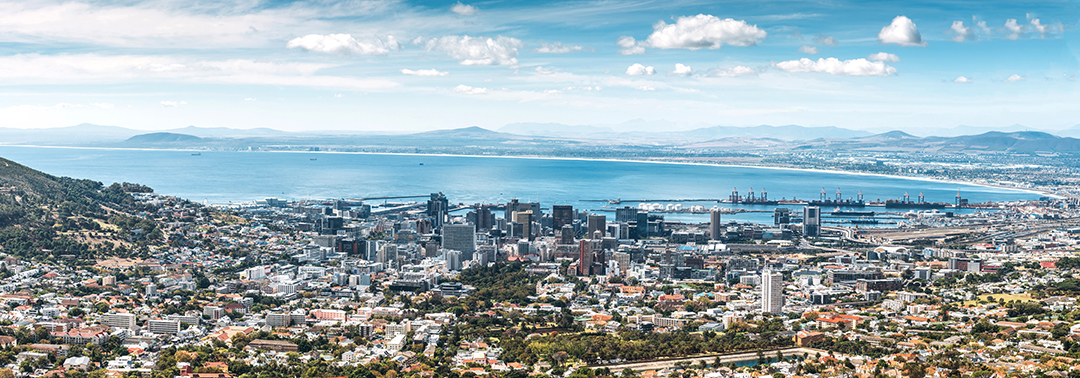
While some of this demand has benefited private fuel suppliers and trading houses, it has also exposed a critical shortage in local bunkering capacity. Despite sitting astride one of the world’s most strategically valuable maritime routes, South Africa’s major ports, including Durban, Ngqura, and Cape Town, rank at the very bottom of the World Bank’s Container Port Performance Index. This is due to ageing infrastructure, maintenance backlogs, procurement delays, and massive bureaucratic inefficiencies under the Transnet National Ports Authority (TNPA).
Turning the Cape Corridor into a durable commercial preference will require more than compelled rerouting due to instability in the Middle East. As illustrated earlier in this article, maritime insurers often act as the financial gatekeepers of global trade. In the current climate, they are not looking for the shortest routes but the most predictable ones. Underwriters are looking for items they can price, including waiting times, time in port, crane rates, bunkering uptime and incident response times.
Southern Africa’s existing maritime information centres and national rescue and vessel-traffic feeds need to be converted into shared risk bulletins and incident reporting mechanisms that insurers can recognise and use. That, in turn, requires an integrated effort across governments to keep the Cape Route commercially clean, enforcing continuous AIS on high-risk calls, tightly monitoring ship-to-ship transfers, and demanding greater ownership transparency from vessels whose behaviour suggests sanctions evasion or shadow-fleet practices.
The war on Iran has shattered the illusion that global superpowers can police the seas into submission, even with the presence of advanced naval task forces. Insurance premiums in the Middle East have hit historic highs, and costs will likely remain elevated even after kinetic engagements end. If the Red Sea taught the market anything, it is that official promises of protection are not the same thing as restored commercial confidence. While global shipping carriers are relearning the value of the Cape Route, South Africa must decide whether it wants to be merely adjacent to the opportunity or central to it.
For South African citizens, busy ports on our shoreline can serve as massive anchors of revenue, requiring thousands of skilled workers spanning from crane operators to marine engineers, logistics coordinators, and customs officials. South Africa’s choice is whether the Cape becomes merely the long way around or the place the market associates with reliability, clean compliance and competent state action.
This article first appeared in Business Day.

Erika van der Merwe
Erika van der Merwe is a research intern with the peace and security programme at Good Governance Africa. She is pursuing a master’s in international relations at the University of Cape Town, specialising in security studies.