Despite decades of advocacy, female genital mutilation (FGM) continues to affect millions of girls. The World Health Organization (WHO) indicated that over 230 million girls and women alive today have undergone female genital mutilation in 30 African countries, the Middle East and Asia, where FGM is practised.
Meanwhile, Africa accounts for the largest share of this total, with over 144 million. Asia follows with over 80 million, of which six million are in the Middle East.
FGM is acknowledged globally as a serious violation of the human rights of girls and women. It stems from deeply entrenched gender inequality and represents a severe form of discrimination. With just four years left to the United Nations Sustainable Development Goals (SDGs) global target to eradicate FGM by 2030, progress is not happening fast enough.
While the procedures involve the partial or total removal of the external female genitalia for non-medical reasons, the practice is sometimes defended on cultural grounds, which helps to control women’s sexuality and preserve perceived notions of purity and marriageability.
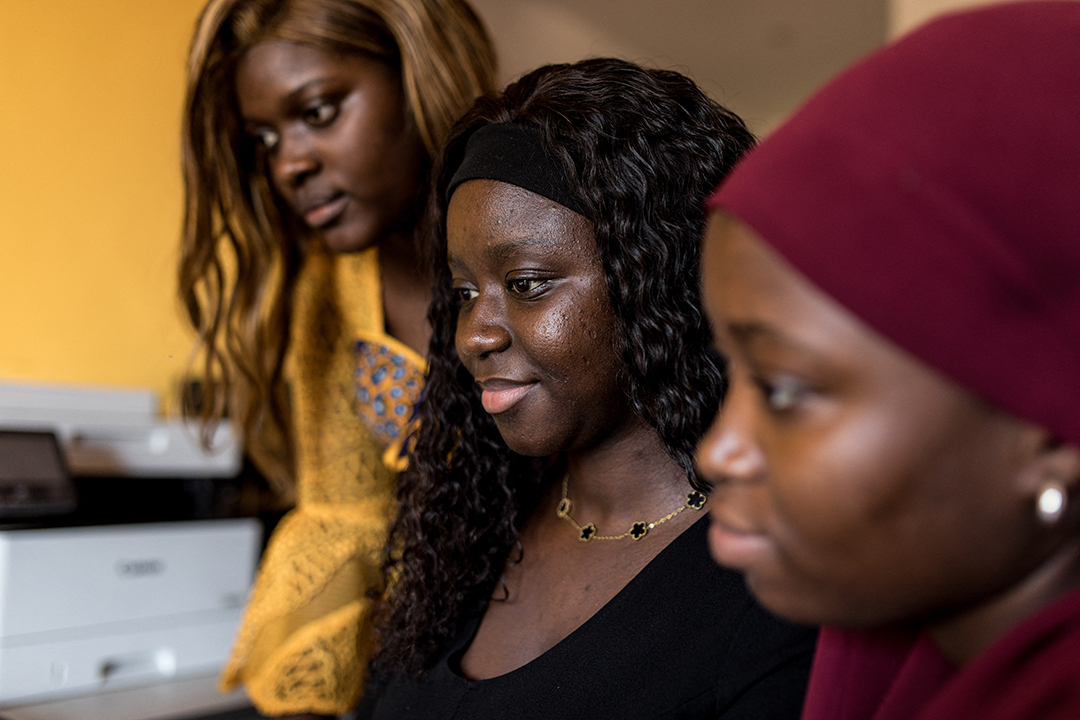
Oumie Jagne (C), a senior programme officer at Think Young Women and a Female Genital Mutilation (FGM) survivor, engages with her coworkers at her workplace in Serrekunda, Gambia, on January 30, 2026. FGM, which ignites strong passions in the tiny West African nation, has been banned since 2015 via a rarely enforced law. Photo by MUHAMADOU BITTAYE / AFP
The reality in Nigeria
Despite a growing global outcry and the implementation of domestic legal frameworks, FGM remains a stubborn reality in Nigeria. It is not merely a lack of information keeping the practice alive; rather, it is anchored by deeply entrenched cultural norms and a heavy cloud of social pressure.
Findings from this author’s interactions with residents across several local communities reveal that the practice is still perceived through a deeply distorted notion of virtue, where it is considered a prerequisite for marriage and a means of preserving a woman’s chastity and social acceptability.
With an estimated 19.9 million survivors, Nigeria accounts for the third highest number of women and girls who have undergone FGM worldwide. Its prevalence varies significantly across Nigeria’s regions, with the South-East and South-West recording the highest rates in the country. According to available data, the South-East has the highest prevalence, with 32% of women aged 15–49 affected, followed by the South-West at 30%.
The World Health Organization (WHO) and UNICEF have also raised concerns about the growing medicalisation of FGM by healthcare professionals who have created a dangerous misconception that the practice is safe simply because it is performed in a clinical setting. This sometimes legitimises and normalises the practice, making efforts to eradicate it even more difficult by giving it a false appearance of professional acceptance.
Bridging the gap between legislation and enforcement
Although legal frameworks prohibiting FGM exist, the gap between legislation and enforcement in Nigeria remains deeply concerning. Enforcement is often weak, while grassroots education and awareness campaigns rarely penetrate deeply enough to challenge the cultural beliefs and social pressures sustaining the practice.
While advocacy campaigns, legal reforms, and increased public awareness have contributed to some progress, the continued prevalence of FGM underscores the urgent need to move beyond policy commitments toward sustained, measurable action. The Violence Against Persons (Prohibition) Act of 2015, which explicitly criminalises FGM, must be implemented more consistently across all states. Law enforcement agencies and relevant authorities also need to ensure that perpetrators are properly investigated and prosecuted rather than shielded under the guise of cultural preservation.
The growing “medicalisation” of FGM also demands urgent attention, as medical regulatory bodies need to enforce stricter ethical guidelines and impose sanctions on medical practitioners who participate in any form of FGM.
Why community engagement matters
While legal protections remain essential, lasting change must come from within the communities where FGM persists. Traditional rulers, religious leaders, women leaders, and other respected community figures must take active roles in challenging the misconceptions that sustain the practice. Their influence is critical in reshaping social attitudes and discouraging practices that endanger the health and rights of girls and women.
Many awareness campaigns have struggled to achieve lasting impact because they often fail to address the lived realities of affected communities. Advocacy efforts should therefore be delivered in local languages and tailored to specific cultural contexts through storytelling, interactive engagement, and visual education. Communities also need to be adequately informed about the severe health consequences of FGM, including infections, excessive bleeding, anaemia, complications during childbirth, increased risk of HIV transmission through unsterile instruments, and long-term psychological trauma.
Expanding access to education and vocational opportunities for girls and women, as Good Governance Africa (GGA) has been doing through our Youth Advocates for Good Governance (YAGG) programme and our convening of young girls for capacity building, including during our annual commemoration of the International Day of the Girl Child, is also essential.
Education strengthens awareness, autonomy, and the ability to resist harmful cultural pressures.
As the 2030 deadline for the global elimination of FGM approaches, Nigeria’s fight against the practice now requires deliberate, coordinated, and sustained action from governments, communities, healthcare institutions, educators, and civil society groups. It is not only a public health obligation; it is a matter of protecting the dignity, rights, and future of millions of girls and women.
Beyond thought leadership on this issue, GGA-Nigeria will also convene stakeholders for practical, joint actions to advance this cause. Consistent with our action orientation, this will include a public dialogue that brings elected lawmakers and their research staff into direct conversations with advocacy groups and others working to advance the well-being of women and the girl child.

Mariam Hassan is a researcher at Good Governance Africa-Nigeria. She is a graduate of Public Health from Babcock University, Nigeria. Mariam has contributed to health interventions through her engagements at Action Health Incorporated, where she supported adolescent health programmes, and at the Youth Clinic of Lagos State University Teaching Hospital, where she gained hands-on experience in youth-centred healthcare services. She is passionate about creating positive change in communities through research and advocacy, and also supports capacity-building initiatives that specifically target women and young people.