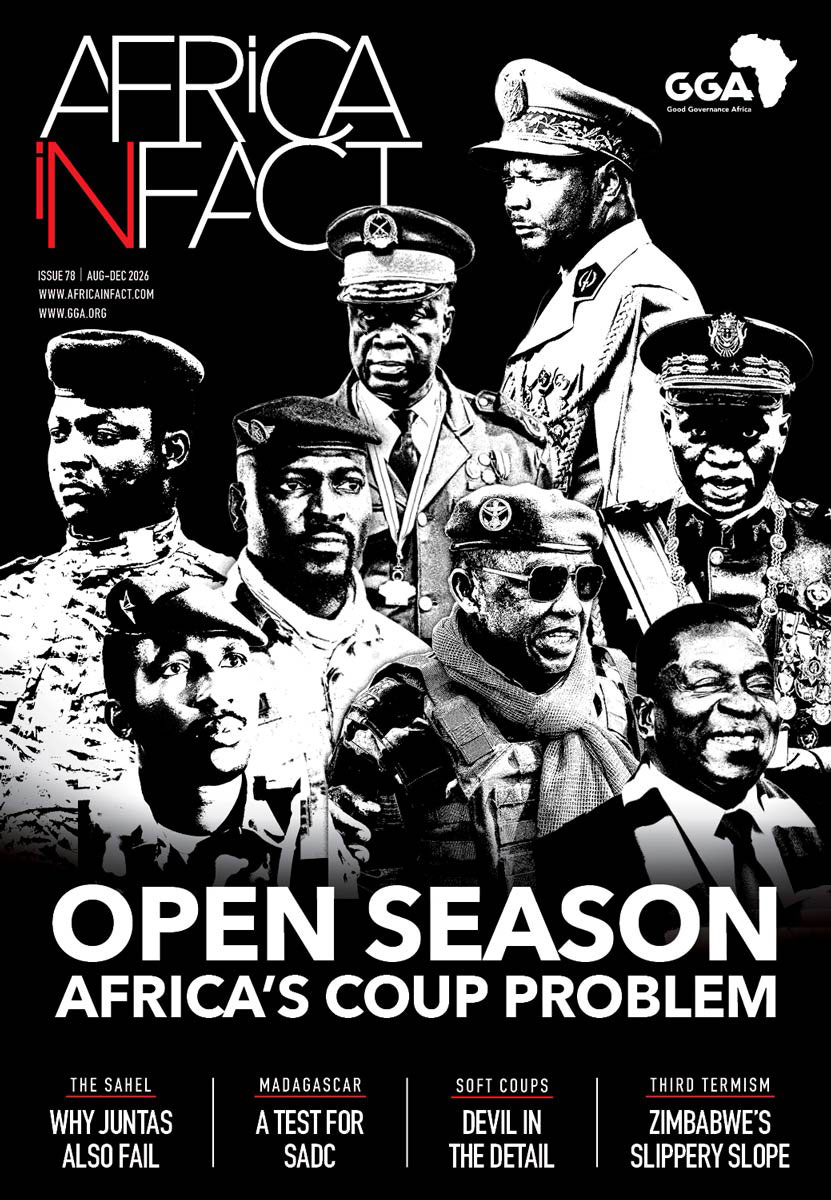
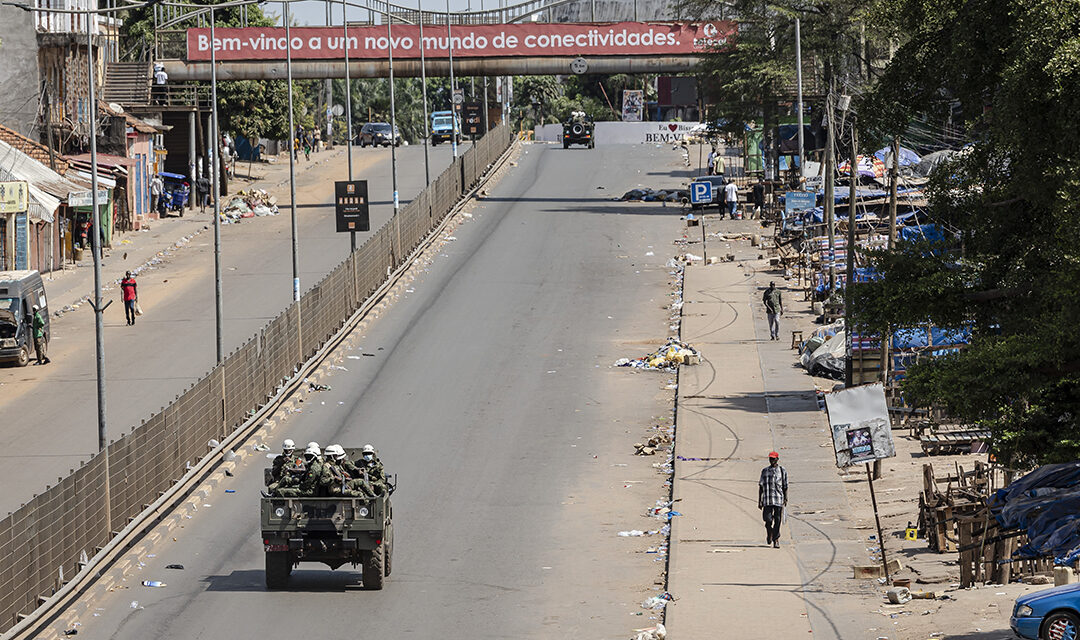
Recent events in Guinea-Bissau, where the military abruptly seized total control, dissolved electoral processes and detained President Umaro Sissoco Embaló on 26 November, mark yet another rupture in a region sliding deeper into an abyss of coups, insurgencies, foreign meddling and institutional decay.
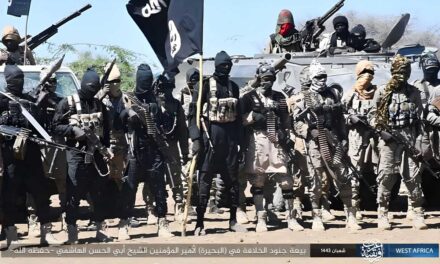
West Africa is grappling with a complex, interconnected set of challenges that extend beyond isolated governance crises such as the recent coup in Guinea-Bissau. The region is also struggling to navigate a systemic crisis in which political instability is increasingly shaped by geopolitical rivalry, transnational crime, strategic recalculations of domestic militaries, and a rapidly deteriorating security outlook occasioned by the resurgence and multiplication of negative security actors, including bandits, kidnappers, ethnic militias and Islamic extremist groups.
At the centre of this regional tremor stands the Economic Community of West African State (ECOWAS). Formed to promote political and economic integration, the body is struggling to address complex challenges that outstrip its traditional toolkit. ECOWAS is facing a steep learning curve as it confronts issues such as coups, terrorism, and geopolitical rivalries that demand more nuanced and robust responses. Its usual measures, such as condemnations, suspensions, and embargoes, combined with a perceived proximity to France that’s variously interpreted as naïve, perhaps even kowtowing, in certain quarters, are no longer sufficient, raising questions about the organisation’s relevance and effectiveness in a rapidly changing region.
The recent development in Guinea-Bissau is dangerous because it comes at a moment when ECOWAS is internally fractured, and its broader legitimacy is under unprecedented scrutiny. With the formal exit of Mali, Burkina Faso and Niger earlier this year, and now a putsch in another fragile member state, the bloc finds itself close to losing the political cohesion that has historically underpinned its security architecture.
However, external actors, especially Russia and other opportunistic geopolitical players, are moving more aggressively into West Africa, offering military partnerships and political cover that rival ECOWAS’s own correction mechanisms. If the body continues to respond with yesterday’s frameworks, it risks being outmanoeuvred by actors who understand that political vacuums in fragile states are prime opportunities for expanding influence. The Guinea-Bissau case should, therefore, not be treated as just another unfortunate headline; it is a strategic alarm bell demanding a significant rethink of ECOWAS’ engagement model over the next 20 years.
What must be done
A first step in updating this playbook is recasting ECOWAS’s interactions with the breakaway junta-led states. For years, the bloc has relied on a binary approach. But the Sahelian juntas have demonstrated that when faced with pressure without viable incentives, they will choose exit over conformity, especially when external partners provide alternatives. The old moralistic posture cannot succeed in a region where legitimacy battles are now entangled with complex security needs and global power competition.
ECOWAS needs to adopt a two-level engagement strategy. Publicly, the bloc must reaffirm its commitment to the constitutional norm, providing a clear and consistent narrative about its democratic principles. Privately, however, its diplomacy must become far more pragmatic and calibrated. That means negotiating concrete, verifiable steps such as reopening electoral timelines, allowing humanitarian access and releasing political detainees in exchange for time-bound and reversible incentives. Instead of an all-or-nothing reinstatement pathway, ECOWAS should establish a ladder of phased rewards, such as technical security assistance, access to development projects, limited trade reopening, and diplomatic de-escalation, tied to actual progress.
This approach acknowledges that complex political transitions require careful management, rather than simplistic solutions. By engaging with juntas, ECOWAS prevents them from seeking external support, thereby maintaining its influence. With a range of incentives, ECOWAS can negotiate more effectively, offering a path forward that balances pressure and cooperation, rather than pushing regimes towards isolation, authoritarianism or even extraversion.
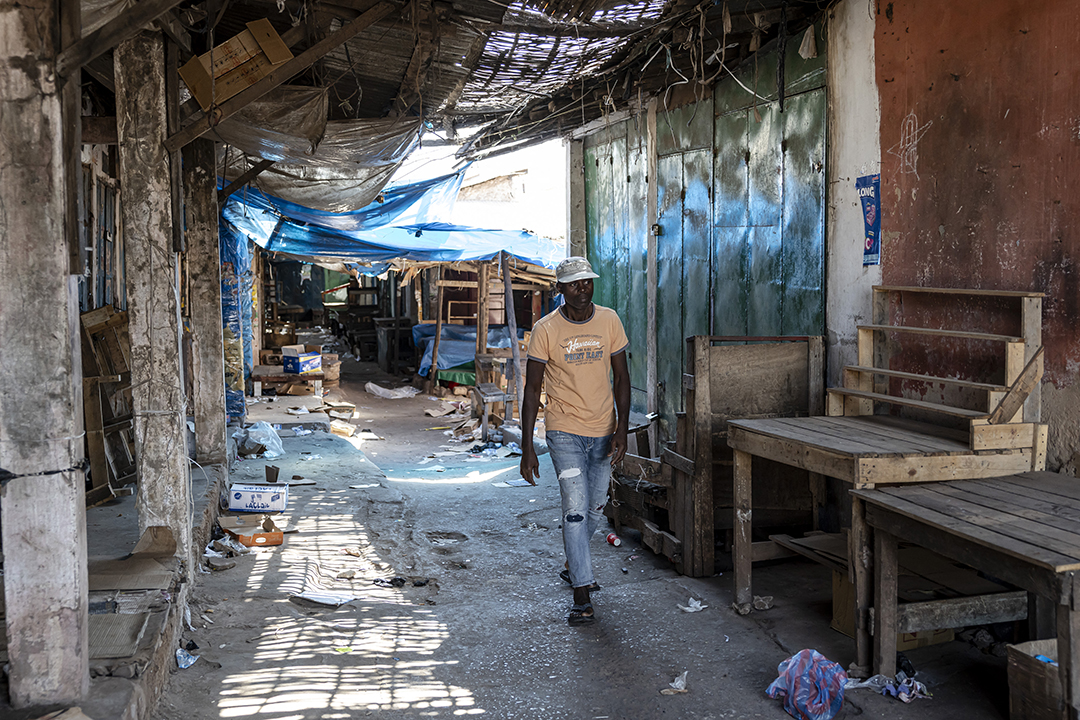
A pedestrian walks in a deserted market in Bissau on November 27, 2025. The Guinea-Bissau military appointed General Horta N’Tam as the country’s new leader on Thursday, a day after seizing power and arresting the president of the coup-prone West African nation. Photo by PATRICK MEINHARDT / AFP
Secondly, ECOWAS needs to become far more proactive in shaping the external landscape. Russia’s growing footprint in Sahelian states, complemented by other non-Western actors seeking security and resource partnerships, is recalibrating the region’s balance of power. In Mali, for instance, the insurgents’ tightening the noose around Bamako and the ongoing blockade of critical supply lines illustrate how fragile states can quickly become arenas for both armed groups and foreign mercenary networks. This is the first time in modern West African history that an insurgency has managed to systematically choke a capital city to threaten both sovereignty and the very survival of state authority.
Indeed, sanctions or communiqués cannot solve this. However, regional intelligence integration, cross-border military coordination, and proactive strategic partnerships are needed to counter both insurgent networks and the foreign actors exploiting them. ECOWAS needs to articulate credible security offers, alongside properly financed, non-lethal, and intelligence-driven initiatives, that make external alternatives less attractive.
Economically, the bloc must showcase its integration framework as a viable alternative to external partnerships by establishing rapid stabilisation tools, including targeted credit lines from pooled resources, a creative infrastructure guarantee scheme, and crisis-response funds. These instruments would provide member states with alternatives to opaque deals with external actors, whose primary interest is securing access rather than strengthening governance.
Implications for Nigeria
For Nigeria, the implications are profound. A destabilised Guinea-Bissau heightens risks across maritime security, narcotics trafficking, and regional political contagion with direct spillover potential. Nigeria, as ECOWAS’ largest economy and security anchor, cannot afford for the bloc to drift into irrelevance.
The government should spearhead a diplomatic effort to ease tensions in Guinea-Bissau while pushing for ECOWAS reforms that acknowledge current geopolitical realities. This dual approach would help stabilise the region and make ECOWAS more effective in addressing modern challenges.
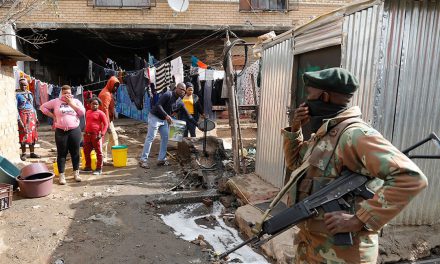
Domestically, Nigeria must also prepare for price shocks, refugee flows and heightened security risks tied to worsening instability in the region. A fragmented ECOWAS weakens Nigeria’s own strategic depth, reduces the effectiveness of its northern border security, and complicates its maritime economic ambitions. It is therefore in Nigeria’s direct national interest to champion a stronger, smarter, more geopolitically attuned ECOWAS.
Ultimately, Guinea-Bissau is not the story of a small country’s political misfortune; it is a mirror reflecting West Africa’s widening fault lines. Hence, the current situation demands more than reflexive condemnation. It calls for strategic imagination, as ECOWAS’ survival depends on its capacity to evolve. The bloc must replace moralistic rigidity with calibrated engagement and punitive overreach with geopolitical foresight. If ECOWAS does not change its playbook now, it will soon find that the region it was created to stabilise has outgrown the tools it continues to rely on.

Adejumo Kabir Adeniyi is a senior researcher at Good Governance Africa-Nigeria. He is an expert with many years of experience in community development work and governance accountability sector. Before joining GGA, Adejumo worked at Premium Times and HumAngle Media, two of Nigeria’s biggest newspapers specialising on conflict and accountability reporting. His work has featured on esteemed local and international platforms, including Zam magazine, El Pais, IJNet, Premium Times, HumAngle Media and TheCable among others. He is a 2019 recipient of the Diamond Awards for Media Excellence, a 2020 recipient of the Thomson Foundation Young Journalist Award in the United Kingdom, and a 2021 recipient of NAREP Oil and Gas Fellowship.

Oladiran (Ola) Bello obtained both his MPhil and PhD degrees in International Relations from the University of Cambridge and also holds a First Class BSc degree from the Obafemi Awolowo University, Ile-Ife. He has worked for organisations including the United Nations (New York) and Management Systems International (Washington DC), Merchant International Group (London) and Arthur Andersen (later KPMG). Dr Ola Bello has more than 10 years of experience in research and policy advisory, including on governance and extractive sector reform; sustainable development; and international development cooperation (including in EU-Africa relations). He spent three years with FRIDE (Spain) managing a donor-funded programme on the EU’s role in managing fragility and resource governance in select African countries. In 2012-2015, he was Head, Governance of Africa’s Resource Programme (GARP) at the South African Institute of International Affairs (SAIIA) and also functioned as head of SAIIA’s Cape Town office. Ola is spearheading GGA's technical support to Nigerian reform, including delivering ethics training for senior Nigerian judicial officers and change-makers (2017-2019). He's also working to expand GGA's role as in-country resource centre for multilateral consultative missions to Nigeria's ministries and parastatals. These missions include the UNECA/AU mineral sector governance team.