Good Governance Africa
Good Governance Africa (GGA) is an independent governance organisation working to strengthen governance systems and institutions across the continent. With centres in West Africa, Nigeria and the Horn of Africa, an active presence in Southern Africa, and partnerships and programmes across the continent, GGA combines locally grounded expertise with a pan-African perspective. Through research, analysis, advocacy, strategic convening, and applied programmes, we generate evidence, inform public debate, and bring together governments, civil society, business, academia, and citizens to advance more accountable, inclusive and effective governance. Working at national, regional and continental levels, GGA connects governance to the development challenges that shape citizens’ lives and Africa’s future. We turn knowledge into action through partnerships and practical engagement that strengthen accountability, inform better policy and decision-making, empower citizens, and create the conditions in which citizens, communities, and economies can thrive.
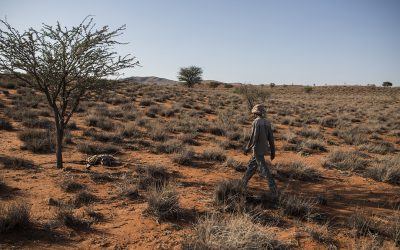
Governance is not only about clean audits

Governance is not only about clean audits

Clean audits are a necessary but insufficient condition for achieving governance performance. But there is more to the story than that. It is highly unlikely that audited entities will deliver value for their shareholders in the long run unless their finances are...

Mining the potential of green industry

Mining the potential of green industry

A July TED talk by Johan Rockström, director of the Potsdam Institute for Climate Impact Research, had already reached 648 293 views at the time of writing. It is not a good-news talk. Essentially, the scientific assessment is that the average ocean temperature is...

Killing the last big tuskers for ‘sport’

Killing the last big tuskers for ‘sport’

Five iconic elephant bulls have been slaughtered  by trophy hunters in Tanzania in the last eight months, at least two of which were “super-tuskers”.  An unofficial agreement between Kenya and Tanzania had protected these elephants for 30 years. A new Avaaz petition...

GNU must reignite the culture of democracy

GNU must reignite the culture of democracy

A growing axis of authoritarianism across the world threatens the democracies that remain, of which there are only a handful (24) that The Economist Intelligence Unit classifies as “full democracies”. In its 2023 index of democratic health — Age of Conflict — South...

The billion dollar ivory illusion

The billion dollar ivory illusion

Southern African nations are at it again. Nyasha Chingono reported in late May that those “hosting the largest elephant populations in the world made a fresh pitch…to be allowed to sell their $1bn ivory stockpiles”, purportedly to allocate it towards conservation. How...

The myth of “too many elephants”

The myth of “too many elephants”

If you’ve had a conversation with anyone recently returned from the Kruger National Park (KNP), you’re likely to hear: “It was lekker, but there are too many elephants! The damage to the trees is crazy.” The idea is often linked to thinking that suggests we should...

Good Governance Africa
Good Governance Africa (GGA) is an independent governance organisation working to strengthen governance systems and institutions across the continent. With centres in West Africa, Nigeria and the Horn of Africa, an active presence in Southern Africa, and partnerships and programmes across the continent, GGA combines locally grounded expertise with a pan-African perspective. Through research, analysis, advocacy, strategic convening, and applied programmes, we generate evidence, inform public debate, and bring together governments, civil society, business, academia, and citizens to advance more accountable, inclusive and effective governance. Working at national, regional and continental levels, GGA connects governance to the development challenges that shape citizens’ lives and Africa’s future. We turn knowledge into action through partnerships and practical engagement that strengthen accountability, inform better policy and decision-making, empower citizens, and create the conditions in which citizens, communities, and economies can thrive.