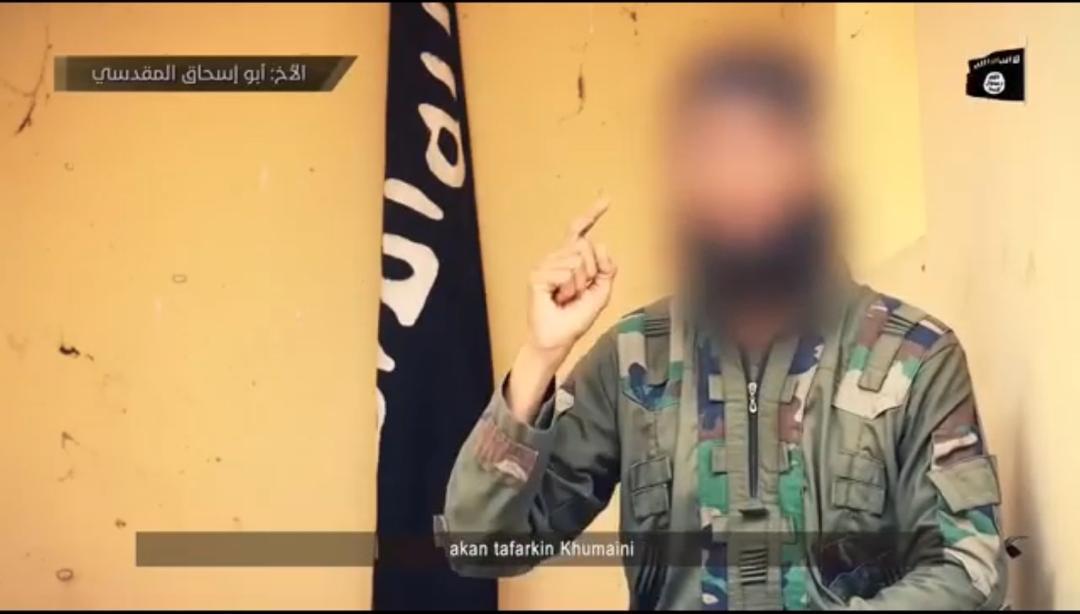
One thing the Islamic State West Africa Province (ISWAP) has successfully done since its Boko Haram split has been to remain obedient and loyal to the Islamic State (IS).
Though IS does not impose leaders on the group, allowing it to send the names and profiles of the leaders it wants for approval and vetting, ISWAP normally values and accepts IS suggestions.
As a result, through the guidance of the global terror organisation, ISWAP has grown into one of its most successful affiliates in the world, mentoring others like IS Sahel and IS Central Africa.
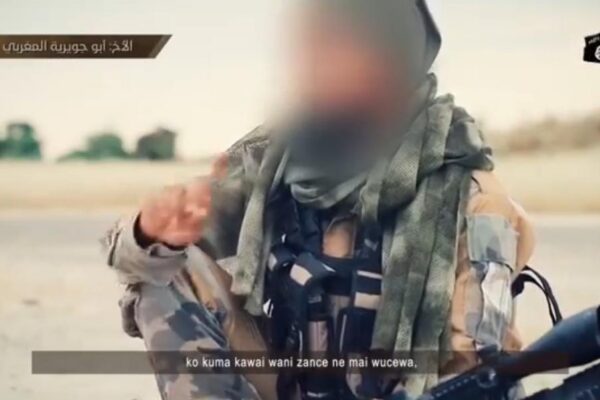
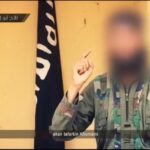
Screenshot of an ISIS propaganda video
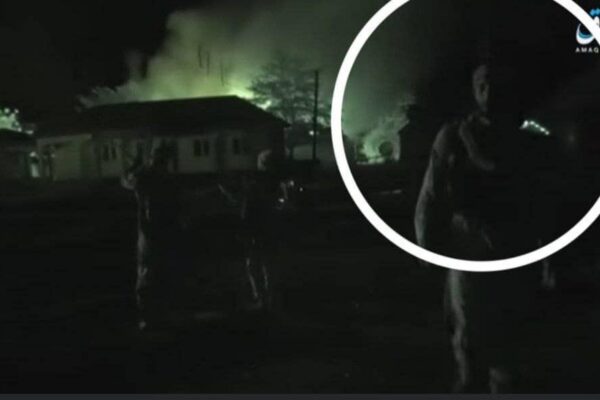
ISIS foreign fighter in Nigeria during attack on Damboa military base on 23 May 2025. ISIS propaganda media.
This success has attracted huge interest from foreign fighters who, amid the setbacks suffered by IS in the Middle East following US-led military campaigns, increasingly view Africa, particularly West Africa, as a favourable destination for continuing their jihad. For some, the region also offers a potential refuge or safe haven, especially for individuals seeking to evade arrest or prosecution in their home countries.
While some foreign fighters are reportedly deployed directly by IS central, others travel independently to join the group. Upon arrival, these fighters are often held in high esteem by local members due to the IS’s global reputation, as well as the expertise they bring in areas such as combat operations, medicine, technology, administration, and theology.
ISWAP has a vetting process for all visitors coming from outside the country. Visitors are taken to a separate island, Jibrillaram in the Marte local government area, where they are kept for observation before being allowed to integrate with other fighters. This is to ensure that they are not spies for security forces.
Over time, some of these foreign fighters began to view themselves as indispensable to the organisation because of the expertise, operational experience, and transnational connections they bring. Many have backgrounds shaped by conflicts in Iraq, Syria, Libya, and the Sahel, and often see their contributions as central to ISWAP’s military effectiveness, propaganda sophistication, administrative structures, and ideological development.
According to former members, some have consequently developed expectations of greater influence within the organisation, including appointments to strategic command, religious, intelligence, or administrative positions.
Tensions have emerged as these expectations clash with ISWAP’s existing local power structures. In many cases, the group’s leadership remains cautious about handing sensitive positions to outsiders, particularly where issues of trust, ethnicity, language, clan dynamics, or operational security are involved. Former members describe this as a source of friction between some foreign fighters and sections of the local leadership, especially among individuals who feel their sacrifices and expertise are not being adequately recognised and rewarded.
Such dynamics are not new to IS, with disputes frequently emerging in Iraq and Syria between local fighters and foreign militants, many of whom were perceived as receiving preferential treatment, better salaries, or disproportionate influence within the organisation.
In the Nigerian context, these grievances are becoming particularly consequential as dissatisfied foreign fighters have, in some cases, built relationships with disgruntled local fighters who already feel marginalised by ISWAP’s hierarchy. Local fighters sidelined from promotion, resource distribution, or decision-making processes are finding allies among foreign fighters and are described as increasingly receptive to criticism of the leadership. Former members suggest these alliances have deepened internal distrust and factionalism within the group.
This struggle for influence, according to those same sources, has exposed vulnerabilities that challenge the long-cultivated perception of ISWAP as a highly disciplined and cohesive organisation. As disaffected fighters voice their frustrations in camps and island enclaves around the Lake Chad Basin, operational security can begin to erode. Sources, including former ISWAP fighters and officials, say loose conversations, personal rivalries, and factional complaints within ISWAP are being capitalised upon by security forces.
A former Hisbah official, ISWAP’s moral police, told GGA, “It would be impossible to kill Bor Mainok (killed in the US-Nigeria joint operation) without exploiting the human weaknesses created by these power struggles. Bor is an extremely cautious person. He does not own a phone because he distrusts electronic devices. He avoids gatherings and is rarely seen in public. Even when he calls for a meeting, such as a Shura council, he sends different messengers to each council member individually, in such a way that no one realises they have been summoned to the same gathering. Each member believes Bor has requested a private, one-on-one meeting. Only when people assemble do they discover the truth. Bor operates this way because he trusts no one.”
Security and intelligence agencies have historically exploited such fractures within insurgent movements, relying on informants, intercepted communications, defectors, and interpersonal disputes to map networks and identify key figures.
The exploitation of vulnerabilities is not new in Nigeria, as internal disagreements, defections, or betrayals have in the past helped arrest fighters and logistics operatives and disrupt supply chains. What officials and analysts describe as distinctive in the case of al-Minuki, however, is that it is the first time these vulnerabilities have been acted upon with devastating effect, resulting in the killing of a specific high-profile target.
Internal politics, selfish interests, greed, and power grabs are nothing new in the Boko Haram conflict. These dynamics fuelled the 2011 split that gave rise to Ansaru, the 2016 schism that created ISWAP, and the deaths of prominent ISWAP leaders such as Mamman Nur and Mustapha Krimima. They were also behind the internal coup that deposed Abu Musab Al-Barnawi in 2018 and also enabled his return in 2021, as well as the expulsion of roughly a dozen clerics who spoke out against the violence and corruption within the group.
While ISWAP used force to quieten dissent in the past, the current situation is described by former members as different in that the current discontent now involves foreign fighters with ambitions for leadership roles, a dynamic that the group appears uncertain how to manage.
ISWAP generates millions of dollars in Lake Chad, evidenced in its longevity, resilience and ability to adapt and respond to setbacks. According to former fighters, it seems other people want a slice of that money, and the easy way is to be part of the leadership group or structure.
One of the reasons why fighters have long been disgruntled is the chasm between the lifestyle of the leadership and that of the fighters. Many fighters are not happy with how lavishly their leaders live while they, the fighters, sacrifice so much while being neglected.
“When you go into their houses, you won’t think the houses are in the forest. You will think you’re in the city or in a hotel. It is only when you step out that you realise where you are. We did not say they should give us the same things they had, but they could make us live better than we were because without fighters, they cannot be leaders,” a former fighter explained.
The way ISWAP has handled infractions is part of the problem. The closer you are to a leader, the more likely you are to get away with serious offences.
This was one of the problems al-Minuki faced. He was loved and despised in equal measures. Those who loved him saw him as benevolent, while others saw him as unforgiving, someone who did not give one a second chance. He was accused of selective justice.
Former fighters gave an instance of how al-Minuki protected those close to him. Two years ago, a popular ISWAP commander, Ba Kaka Benisheikh, was reportedly caught taking drugs. Al-Minuki ensured that he escaped punishment. Instead, Ba Kaka was deployed to Sambisa to lead the fight against Ali Ngulde, the JAS Amirul Jaish, in the Mandara Mountains.
Propaganda, silence, and organisational shock
The editorial published in al-Naba, IS’s weekly propaganda bulletin, shortly after the killing of al-Minuki appears to function as a morale-reconstitution message aimed at stabilising fighters and supporters amid an apparent operational crisis within ISWAP.
Against this backdrop, the editorial’s repeated emphasis on steadfastness, sacrifice, and the continuity of jihad despite the death of commanders takes on heightened significance. It frames leadership losses as temporary tests rather than existential setbacks, urging fighters not to succumb to despair or disillusionment. Such messaging is characteristic of IS propaganda during periods of leadership decapitation or internal instability, particularly when the loss involves a strategically important figure.
The imagery accompanying the editorial, fighters marching in disciplined formation holding Islamic State flags, further reinforces the message of continuity and cohesion. Taken together, the editorial appears less like a routine ideological essay and more like a deliberate effort to reassure cadres that the organisation remains intact despite the loss of a senior commander.
While the text does not explicitly mention al-Minuki or ISWAP, the timing, tone, and themes strongly suggest that it may have been crafted with the aftermath of his death in mind. The editorial, therefore, offers a glimpse into how IS central media may be attempting to contain the effects of a potentially significant disruption within ISWAP.
Since al-Minuki’s death, IS channels have remained unusually silent regarding ISWAP activities, a notable departure from the group’s normally busy and consistent propaganda rhythm. ISWAP has also not released its weekly recap of activities, with its radio service – Radio Ra’id – silent.
According to GGA sources, ISWAP’s media arm was likely impacted by the strike against al-Minuki. While ISWAP maintains media departments in Sambisa, Farouk, and Krenowa, the Buhaira Wilayat’s media team serves as a coordination hub and maintains the communication channel between ISWAP and Amaq, the IS news agency.
“In the media department, there are distinct roles for individuals: those who handle computers, those who operate cameras, those who focus solely on writing, and those who handle radio production. Computer operators are primarily responsible for editing footage captured by the camera teams on the battlefield. After fighters return from an operation, they hand over the cameras to someone who downloads the content and clears the memory cards. This person then passes the raw materials to the editing team. Once the editing is complete, a separate individual previews the content. After final approval, the materials are sent to Amaq,” a former senior ISWAP media operator explained, adding that taking out the individuals playing any of these roles can cause significant disruption to the media team’s operations.
Window of opportunity opens for mass exits
The documented discontent within ISWAP, particularly among sidelined foreign fighters and frustrated local members, may increase the likelihood of exits, defections, and covert cooperation with security agencies. As trust within the organisation erodes, fighters who feel excluded from leadership, denied access to resources, or treated unfairly by commanders may begin to reassess their commitment to the group. This is especially likely when internal grievances intersect with fear generated by successful counterterrorism operations, such as the killing of al-Minuki.
For many rank-and-file fighters, such developments undermine ISWAP’s image as an invincible, tightly organised movement. The history of the Boko Haram conflict demonstrates that factional disputes, selective justice, leadership rivalries, and unequal treatment have repeatedly driven splinters, defections, and internal betrayals. As tensions deepen, some fighters may choose to escape the movement entirely, while others may quietly provide intelligence in exchange for protection, amnesty, or reintegration opportunities.
This is where Operation Safe Corridor (OPSC), Nigeria’s prominent Demobilisation, Deradicalisation, Rehabilitation and Reintegration programme, becomes strategically important. Beyond its deradicalisation and rehabilitation objectives, OPSC can serve as a critical instrument for further weakening ISWAP by encouraging defections and depleting the group’s fighting force. Fighters who are already disillusioned by internal corruption, leadership privilege, selective punishment, and power struggles may become more willing to surrender if credible pathways for rehabilitation and reintegration exist, such as those offered by the programme.
Every successful defection not only reduces ISWAP’s manpower but also creates more opportunities for intelligence collection on the group’s structure, supply chains, finances, leadership disputes, and operational methods. Former fighters have historically provided valuable information that contributed to arrests, interdictions, and targeted operations against insurgent networks.
In this context, authorities can capitalise on ISWAP’s internal fractures by combining sustained military pressure with targeted messaging campaigns that serve to amplify distrust within the group while simultaneously promoting safe exit pathways for dissatisfied fighters.

Malik Samuel is a senior researcher at Good Governance Africa-Nigeria. Before joining GGA, he was a researcher with the Institute for Security Studies, specialising in the Boko Haram conflict in the Lake Chad Basin Region. Malik also worked as a conflict researcher with Amnesty International Nigeria. He was also a Médecins Sans Frontières/Doctors Without Borders field communications manager in Northeast Nigeria. Before that, he was an investigative journalist at the Abuja-based International Centre for Investigative Reporting. Malik holds a Master's degree in Conflict, Peace, and Security from the Universitat Oberta de Catalunya and the United Nations Institute for Training and Research (UNITAR).