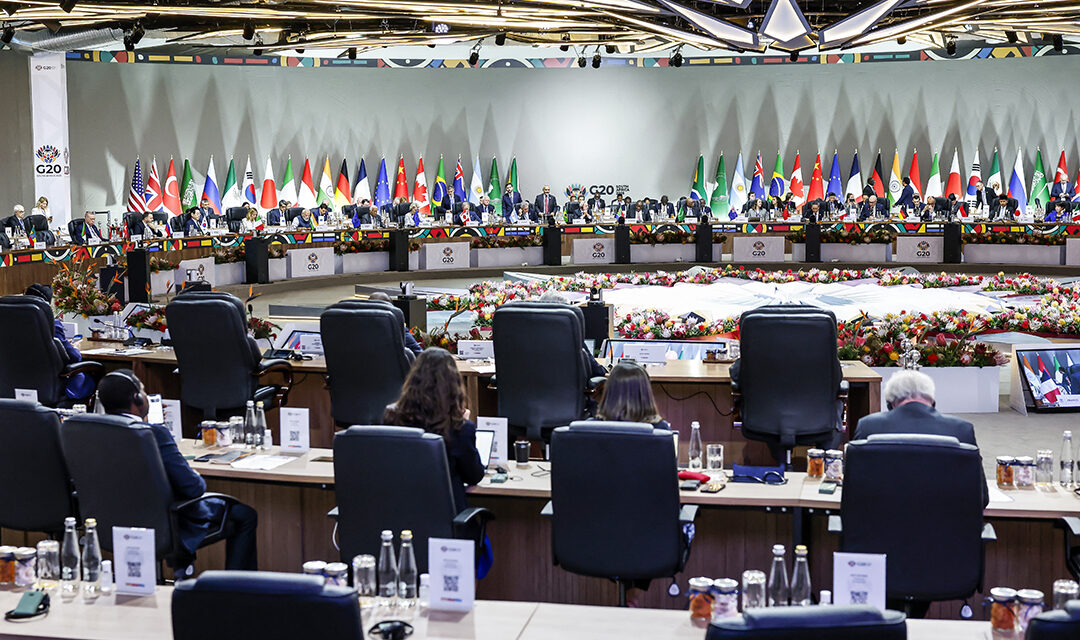
Several governance and integrity priorities that Good Governance Africa (GGA) championed through official G20 civil society processes have been reflected in the final G20 Leaders Declaration published this week, a strong affirmation that African research and policy advocacy are shaping global decision-making at the highest levels.
GGA CEO-SARO Patrick Kulati participated in the G20 Social Summit alongside GGA’s Ruth Kolevsohn, GGA’s Executive Director, Governance Programmes, where they made verbal and written submissions on institutional integrity, anti-corruption action, and the protection of civic space. These contributions informed the consolidated civil society recommendations delivered to G20 leaders.
“As I read the Leaders’ Declaration, I was genuinely heartened to see issues we raised at the Social Summit reflected in the final text. We were not the only voices advocating for these priorities, but our evidence, experience, and recommendations contributed to what informed the outcomes. This demonstrates that GGA’s voice is not only being heard, it is helping to shape global governance priorities,” said Kulati. Strengthening citizens to hold their governments to account while simultaneously helping governments to deliver services more effectively is at the heart of GGA’s mission.
GGA particularly welcomes the Declaration’s strong emphasis on zero tolerance for corruption, the reinforcement of UN Convention Against Corruption (UNCAC) implementation, improved cooperation against illicit financial flows, and explicit commitments to whistleblower protection and civil society participation.
Kolevsohn said the “strong language in paragraphs 113 and 114 of the Leaders’ Declaration aligns closely with the positions GGA had put forward in its verbal and written submissions. These commitments mark a decisive shift from broad statements of intent to more concrete actions, including strengthened whistleblower protection, robust asset recovery, and greater engagement with civil society. This is a tangible endorsement of the governance reforms that GGA has consistently championed across the continent,” she said.
The final Declaration commits leaders to:
-
-
- Lead by example against corruption and illicit financial flows, recognising their damaging impact on rule of law, markets, public trust, and inequality.
- Strengthen integrity, accountability, and transparency in public administration, including preventing conflicts of interest.
- Reinforce the implementation of the UNCAC and related international instruments, including criminalising and countering foreign bribery.
- Advance asset recovery measures, including reference to the G20 High-Level Principles on the Administration of Seized and Confiscated Assets.
- Recognise and strengthen the role of civil society, academia, media, and the private sector in preventing and fighting corruption.
- Deny safe haven to corrupt offenders and their assets, and expand cooperation in tracing and returning stolen resources.
- Enhance whistleblower protection mechanisms, including noting the 2025 G20 Accountability Report on Whistleblower Protection.
-
GGA believes the inclusion of these issues in the Leaders’ Declaration provides a significant opening for African states, regional bodies, and global partners to accelerate reforms that citizens have long demanded. This moment strengthens continental and global calls to:
-
-
- Make anti-corruption enforcement real and visible, not merely rhetorical, through credible investigations and prosecutions.
- Build robust systems for asset recovery and return, ensuring stolen public resources are redirected to public benefit.
- Protect whistleblowers and investigative actors, so exposing corruption is safe, supported, and rewarded.
- Defend civic participation and trust, recognising that open civic space is a precondition for sustainable development.
-
GGA will continue to work with governments, regional institutions, civil society networks, and communities to support the translation of global commitments into measurable local outcomes. Through independent research, high-level convening, and strategic partnership-building, GGA aims to help ensure that the momentum reflected in the G20 Leaders’ Declaration drives real governance improvements across the continent.
“The world is paying attention to governance challenges and solutions emerging from Africa. Our task now is to convert these global commitments into everyday progress – in stronger institutions, safer civic spaces, and public resources used for the public good,” Kulati concluded.