
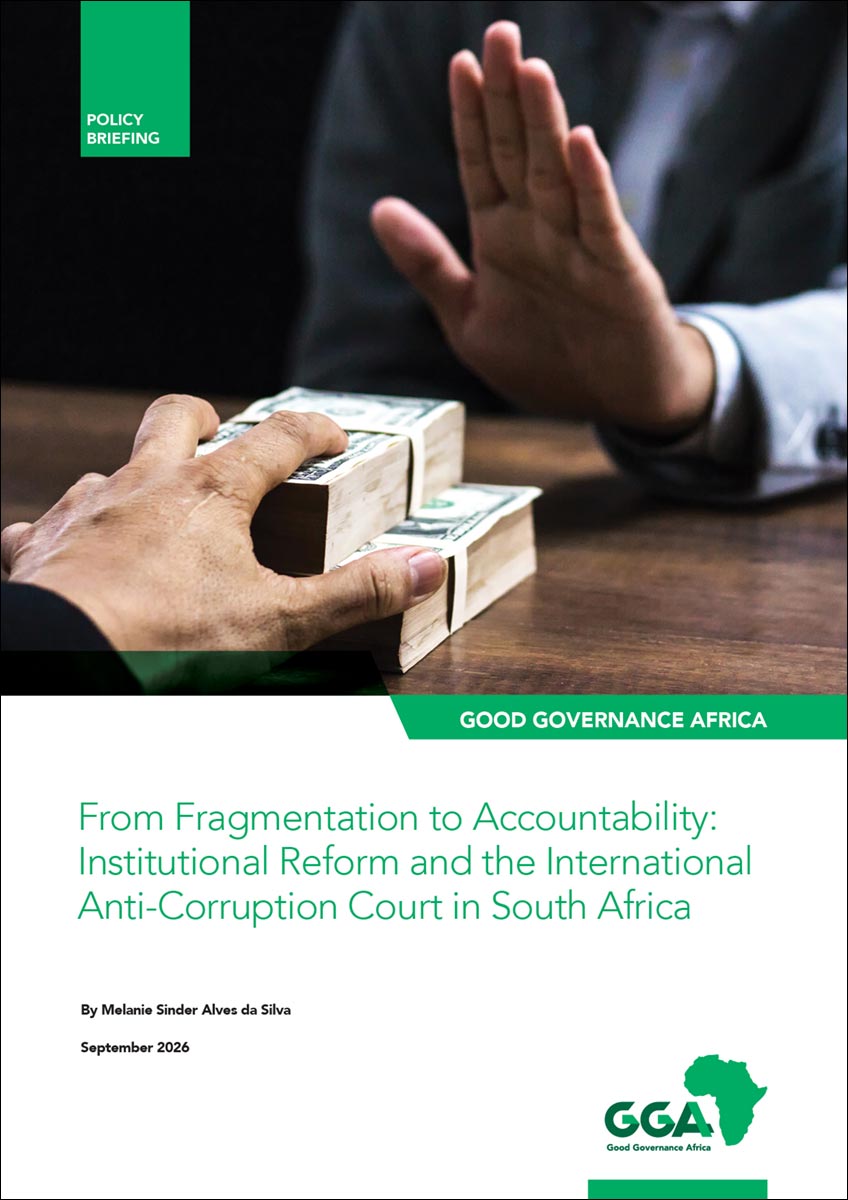
South Africa faces a persistent accountability gap in addressing grand corruption. Despite a comprehensive legal framework and multiple oversight institutions, enforcement remains fragmented, politically exposed, and inconsistently applied. Exposure has not translated into accountability, with limited asset recovery and few successful prosecutions of senior officials.
The central weakness lies in enforcement rather than the absence of legal architecture. Weak coordination, political interference, and limited capacity to address transnational corruption flows continue to undermine outcomes. International frameworks like the United Nations Convention against Corruption (UNCAC) and Financial Action Task Force (FATF) standards provide important benchmarks, but their effectiveness ultimately depends on consistent domestic implementation and enforcement.
This policy briefing proposes a practical, phased reform pathway that strengthens existing institutions. Priority actions include formalising inter-agency coordination, introducing digital case-tracking systems, strengthening whistleblower protection, and scaling effective enforcement models within the current system. In parallel, the Department of Justice and Constitutional Development and the Department of International Relations and Cooperation (DIRCO), in consultation with relevant enforcement agencies, should assess South Africa’s strategic engagement with the proposed International Anti-Corruption Court (IACCourt), particularly its potential contribution to cross-border investigations and asset recovery.
The objective is clear. South Africa should shift from episodic exposure to consistent enforcement, strengthening institutional credibility and the rule of law, while improving the country’s broader governance and investment environment.