As geopolitical competition intensifies over critical minerals and energy supply chains and the current US-Iran war reshapes oil markets and global trade routes, Africa finds itself increasingly at the centre of the emerging global order.
Few geographic facts capture this reality better than the simple observation that Africa is the only continent located in all four hemispheres. Divided north and south by the Equator and east and west by the Prime Meridian, geography places Africa at the centre of the world’s hemispheres. The question is whether governance will translate that position into lasting influence.
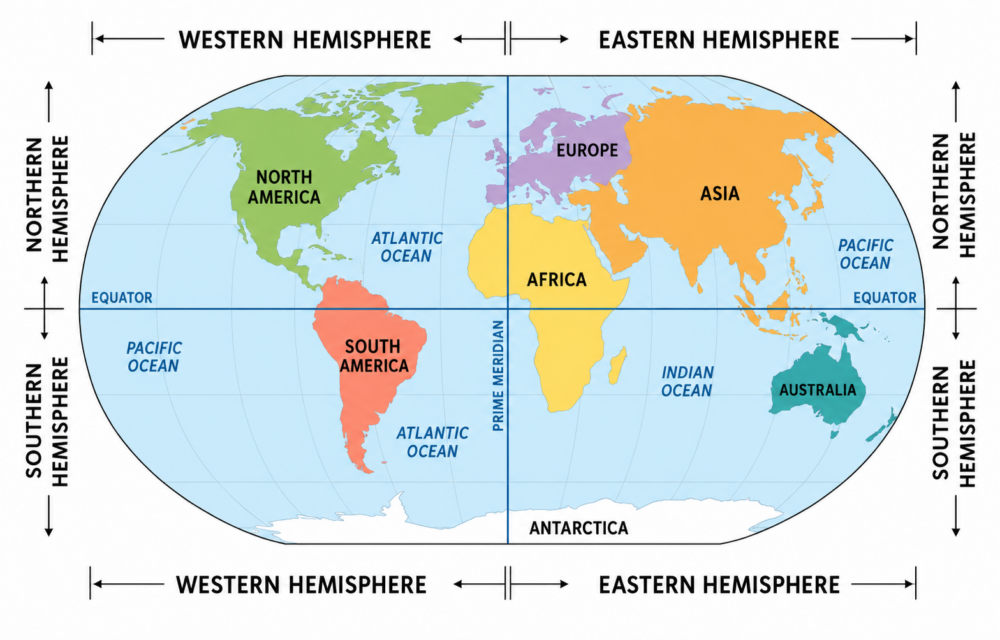
Three structural shifts explain why this moment matters. The first is demography. Africa is home to approximately 1.47 billion people and, according to United Nations projections, one in four people in the world will be African by 2050. More than 60% of Africans are under the age of 25, making it the youngest continent on Earth. Whereas much of Europe and East Asia face ageing populations and shrinking workforces, Africa’s labour force will expand dramatically in the coming decades.
This demographic shift could create one of the largest economic opportunities of the century. A growing workforce can drive productivity, entrepreneurship and growth. However, population growth alone does not generate prosperity. In several African countries, population growth approaches 3% annually, meaning economic growth must exceed that threshold simply to raise per capita incomes.
Without productive investment, employment creation and capable institutions, rapid population expansion risks reinforcing unemployment and inequality rather than alleviating them. Demographic dividends materialise only when supported by sound policy, effective governance and accountable institutions. Therefore, Africa’s youth population represents both a remarkable opportunity and a test of institutional capacity.
Urbanisation will also play a decisive role in determining whether this demographic shift becomes an asset or a liability. Africa’s cities are expected to absorb hundreds of millions of new residents in the coming decades, making urban governance, infrastructure planning and service delivery central to the continent’s economic future. If managed well, urbanisation can accelerate industrialisation, innovation and regional integration. If mismanaged, it risks entrenching inequality, unemployment and social instability.
Education systems and labour markets will be critical. Expanding access to quality education, strengthening technical and vocational training and supporting entrepreneurship will determine whether Africa’s growing workforce becomes a driver of global economic dynamism or a source of mounting social pressure.
A second structural shift concerns Africa’s strategic role in the global energy and technology transition. The continent holds significant reserves of minerals essential to modern industrial systems, including cobalt, lithium, platinum, manganese and rare-earth elements. These minerals underpin electric vehicles, renewable energy technologies and advanced electronics. They are also increasingly important in defence and security industries, where the same minerals are used in drone systems, battery technologies and other forms of military hardware.
As global powers compete to secure supply chains for critical minerals, Africa’s resource base has become central to the geopolitics of the energy transition. The continent also holds substantial renewable energy potential. Large parts of Africa receive some of the highest levels of solar radiation in the world, while geothermal and wind resources remain underdeveloped in several regions.
Yet natural resource wealth does not automatically translate into development. Infrastructure deficits, weak regulatory frameworks and governance failures often prevent countries from fully leveraging the value of their resources. Electricity generation across much of the continent remains constrained by limited transmission networks, while poorly planned large-scale infrastructure projects can generate ecological and social costs. In other words, geology creates opportunity, but governance determines whether those opportunities become engines of development.
Africa’s mineral wealth is also increasingly intertwined with global strategic competition. As the United States, China, the European Union and other major powers seek to secure reliable access to critical minerals, African countries find themselves navigating a complex landscape of investment partnerships, supply-chain negotiations and geopolitical interests.
This creates opportunities for economic growth and industrial development, but it also raises important questions about resource governance, environmental sustainability and the equitable distribution of benefits.
For many African countries, the challenge will be to move beyond the historical pattern of exporting raw commodities and instead capture greater value through local processing, manufacturing and technology development. Achieving this will require coherent industrial policy, improved infrastructure and regulatory frameworks capable of managing complex global supply chains.
The third shift concerns governance and accountability. Across the continent, many countries continue to face structural challenges, including debt pressures, infrastructure deficits, political instability and corruption.
According to international financial institutions, nearly half of African countries now have debt-to-GDP ratios exceeding 60%, limiting fiscal space for development investment. Weak rule-of-law institutions also undermine investor confidence and reduce the effectiveness of public policy. South Africa’s experience with state capture, documented extensively by the Zondo Commission, demonstrates how the systemic erosion of public institutions can weaken economic performance, distort public procurement and undermine democratic accountability.
Strengthening accountability mechanisms will therefore be central to Africa’s ability to convert its strategic advantages into long-term development.
One proposal gaining increasing attention among governance scholars and policy advocates is the proposed International Anti-Corruption Court (IACCourt), designed to prosecute grand corruption when national legal systems are unable or unwilling to act.
The idea reflects a growing recognition that large-scale corruption often involves cross-border financial systems and illicit flows that require international cooperation to address.
The scale of illicit financial flows from Africa illustrates the urgency of this challenge. An estimated USD 89 billion leaves the continent each year through corruption, tax evasion and illicit transfers, depriving governments of resources that could otherwise be invested in infrastructure, education and public services. Strengthening both domestic institutions and international accountability mechanisms will be essential to ensuring that Africa’s economic potential translates into tangible development outcomes.
Africa’s growing presence within global governance institutions reinforces the stakes. The African Union’s admission as a permanent member of the G20 signalled recognition that the continent’s economic and political influence can no longer be treated as peripheral to global decision-making. Africa’s 54 states already constitute the largest regional voting bloc within the United Nations, giving the continent considerable diplomatic weight. In principle, this influence could allow African governments to shape global debates on trade, climate policy, development finance and security.
Yet institutional presence alone does not necessarily translate into effective policy outcomes. Continental initiatives such as the African Continental Free Trade Area (AfCFTA) illustrate both the promise and the challenge of regional integration. In practice, implementation remains uneven because of persistent non-tariff barriers, weak customs systems, infrastructure gaps and political protectionism, which continue to constrain cross-border trade. The success of AfCFTA will depend less on the signing of agreements and more on the difficult domestic reforms required to operationalise them.
At the same time, Africa’s strategic position between major global powers places increasing pressure on its political institutions. Competing economic partnerships, infrastructure investments and security arrangements mean that African governments must carefully balance external interests with safeguarding national sovereignty and long-term development priorities. Strong institutions and transparent governance will be essential to navigating these pressures.
Yet geography alone does not determine destiny. Geography may position Africa at the centre of the world’s hemispheres but governance will determine whether that position becomes a platform for leadership or a stage for intensified geopolitical competition. Without stronger institutions, economic reform and accountability, Africa’s strategic importance could deepen external competition for its resources without delivering broad-based prosperity.
However, if governance is strengthened through capable states, accountable leadership and effective economic policy, Africa could become one of the most important engines of global growth and cooperation in the decades ahead. Geography has already placed Africa at the centre of the world’s hemispheres. Whether it becomes a centre of global leadership will depend on the strength of its institutions.
This article first appeared in Mail & Guardian.

Dr Ruth Kolevsohn is the Executive Director of Governance Programmes at Good Governance Africa, a member of the GGA Group Board and alternate director for the Chair of GGA-SARO. She leads GGA’s continent-wide advocacy and communications efforts to promote the signing and ratification of the treaty establishing the International Anti-Corruption Court (IACCourt), working with governments, civil society, academia, and international partners to advance accountable governance across Africa. She also serves on the Interim Executive Council of the AU Advisory Board against Corruption (AUABC) Non-State Actors Forum and the Africa Subcommittee for the establishment of the IACCourt. With over 30 years’ experience spanning the public, private, academic, and social sectors, Ruth specialises in translating research into action, with a focus on prevention, empowerment, and systemic reform. Her work includes strategic advocacy, stakeholder engagement, social and behavioural change communication, and coalition building across diverse African contexts. She has led multi-award-winning teams and delivered programmes that strengthen public trust, institutional integrity, and citizen participation. Ruth is completing a PhD in Psychology at the University of Pretoria, studying social representations of anti-corruption and holds a Doctor of Business Administration in Executive Leadership from the European Institute of Applied Science and Management (Prague).